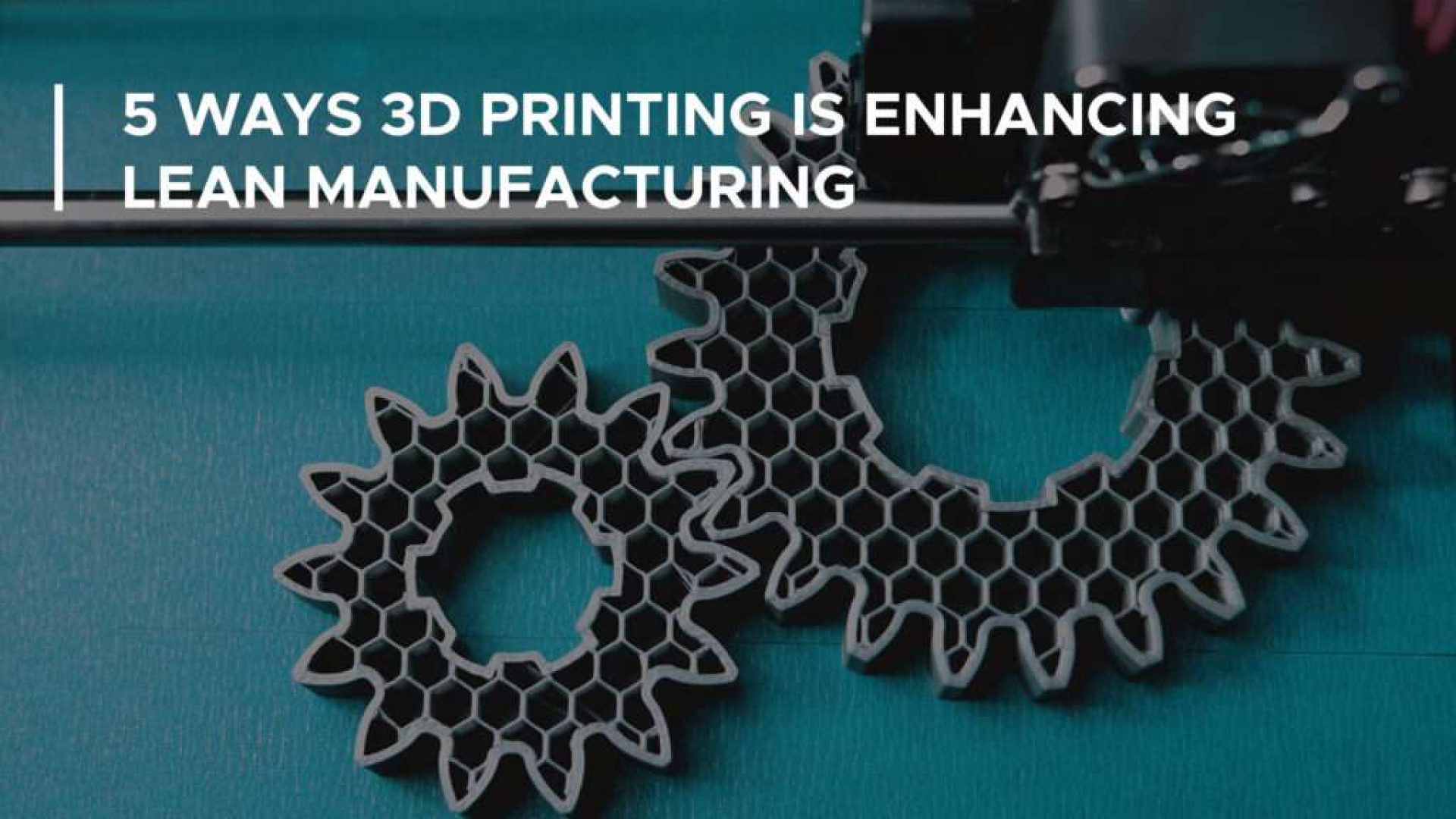
Lean manufacturing is one of the most influential methodologies for optimizing processes and cutting waste in production. It originated in the Toyota Production System and has since spread across manufacturing industries worldwide. 3D printing, or additive manufacturing, opens up new ways to reach exactly these lean goals. This article looks at how additive manufacturing reduces waste and boosts efficiency along the five principles of lean.
What Is Lean Manufacturing?
At its core, lean manufacturing is about creating value by minimizing waste and using production resources efficiently. Waste, in this context, is any activity or process step that adds no value to the end product but still increases cost and reduces efficiency. Toyota’s chief engineer Taiichi Ohno defined seven types of waste for this, known in Japanese as “Muda.”
| Type of Waste | Description |
|---|---|
| Overproduction | Producing more than is actually needed |
| Waiting | Parts, materials, or information aren’t available when needed, causing delays |
| Transportation | Unnecessary movement or transport of goods |
| Excess inventory | Holding more stock than necessary ties up capital, raises storage costs, and risks obsolete stock |
| Motion | Unnecessary movement of people, equipment, or materials |
| Over-processing | Doing more work than necessary adds unneeded cost, time, and effort |
| Defects | Parts that don’t meet quality standards, leading to rework, scrap, or returns |
Building on this, James Womack and Daniel Jones set out five principles in their 1990 book “The Machine That Changed the World” that still serve as the backbone of lean transformations today. According to the Lean Enterprise Institute, these are: specify value from the customer’s standpoint, map the value stream, create flow, establish pull, and pursue perfection.
How 3D Printing Supports Lean Manufacturing
3D printing, combined with decentralized manufacturing, offers unique ways to reduce or eliminate many of these wastes. Walking through the five lean principles shows just how much additive manufacturing can increase the efficiency of value chains.
1. Identify Value: Focusing on What Customers Actually Need
The first lean principle is about understanding and delivering what the customer truly values. 3D printing offers a real advantage here in developing and launching new products: companies can use additive manufacturing to prototype and test new designs quickly, without heavy ramp-up costs, to find out what customers actually value. It also enables the production of customized, personalized parts for individual customer needs. That flexibility lets manufacturers widen their product range with niche products that bring real benefit to specific customer segments.
Miele offers new accessories in its online shop that are produced on demand once a customer orders, via Replique’s digital inventory platform. As Replique and Miele announced in 2021, the partnership lets Miele offer new accessories quickly and cost-effectively from a batch size of just one.
2. Map the Value Stream: Reducing Complexity with Additive Manufacturing
The second principle calls for identifying and mapping the entire value stream, from raw material to end customer. Traditional manufacturing often needs multiple suppliers, transport steps, and assembly stages, which makes for a long, complex value stream. 3D printing, by contrast, allows parts to be produced directly with minimal intermediaries, cutting assembly costs and shortening the value stream considerably. Combined with decentralized manufacturing, it also removes the need to physically move parts between locations: parts can be produced right at the point of use, cutting lead times and making the whole process faster and more responsive.
How complex is your current value stream?
We’ll show you where decentralized additive manufacturing can meaningfully simplify your supply chain.3. Create Flow: Eliminating Unnecessary Production Steps
The third principle, flow, is about a smooth, uninterrupted movement of materials and information through the entire production process. Traditional manufacturing often needs time-consuming tooling changes and setup adjustments to switch between parts. 3D printing, on the other hand, allows for a nearly uninterrupted flow of production, since there’s barely any setup beyond a material change. That sharply cuts waiting times and unnecessary motion, resulting in a genuinely smooth production flow.
4. Pull: Producing Only What’s Actually Needed
The fourth principle, pull, is about limiting inventory while making sure all the materials and information needed for a smooth workflow are available. Traditional manufacturing usually needs large production runs to stay cost-effective, which leads to overproduction and excess inventory. One of the biggest advantages of 3D printing is the ability to produce parts on demand, per customer order, based on actual demand. This pull-based approach helps manufacturers cut waste in inventory and use resources more efficiently and purposefully.
Small series can be produced more cost-efficiently when they’re made in response to an actual customer order, rather than kept in stock.
5. Continuous Improvement: Faster Design Iterations
The last lean principle is continuous improvement. As the technology keeps advancing, more and more parts become viable candidates for additive manufacturing. That gives companies an ongoing opportunity to look for ways to improve both products and production processes. The speed and flexibility of 3D printing make design iterations quick and easy, letting manufacturers roll out improvements fast.
How Platforms Unlock the Full Benefits of 3D Printing
3D printing on its own already improves production efficiency, but a decentralized manufacturing approach takes that benefit further still. Additive manufacturing platforms like Replique give manufacturers a streamlined way to connect with 3D printing service providers and tap into additive manufacturing capacity on demand. By combining on-demand 3D printing with a digital inventory, companies can get their parts produced safely and efficiently.
With a digital inventory, companies upload their 3D models along with qualified production parameters that are then locked in for all future orders. The digital inventory gives them a complete overview of every 3D-printable part and past order. Whenever a part is needed, whether for internal use or by customers, the order can be processed quickly through the digital inventory and printed by a partner located close to the end user. This removes the need for manufacturers to invest in expensive 3D printers and related equipment, letting them draw on the expertise and capacity of additive manufacturing service providers instead. Reordering also becomes much smoother, since all parts and their production data are securely stored in the digital inventory, no paperwork or email chains needed, which saves time and cuts the risk of errors.
Ready to put lean principles to work in your production?
See how Replique digitizes your spare parts and accessories portfolio.A digital inventory platform like Replique lets companies deliver parts anytime, anywhere, in the right quality and quantity, turning additive manufacturing into a real lever for lean manufacturing in practice.
FAQ
What is lean manufacturing?
Lean manufacturing is a process optimization methodology based on the Toyota Production System. Its goal is to create value for the customer while eliminating every form of waste, including overproduction, waiting time, and excess inventory.
How does 3D printing help reduce waste?
3D printing allows production to order rather than to stock, nearly eliminates setup time, and enables direct, decentralized production close to the end customer. That directly counters the wastes of overproduction, excess inventory, and unnecessary transport.
What are the 5 principles of lean manufacturing?
The five principles set out by Womack and Jones are: identify value, map the value stream, create flow, establish pull, and pursue continuous improvement.
On Additive Manufacturing
Does 3D printing make sense for high-volume production too, in lean terms?
Additive manufacturing delivers its biggest lean benefits for low- to mid-volume, customized parts. For high-volume production, traditional manufacturing usually remains more cost-effective, though 3D printing can still serve as a flexible, supplementary tool.
What role does a digital inventory play in lean manufacturing?
A digital inventory centrally stores 3D models and production parameters, which is what makes pull-based, on-demand production practically achievable, without physically stocking parts in advance.
How does Replique help companies put lean principles into practice?
Replique connects manufacturers, through a digital inventory platform, with a decentralized network of qualified 3D printing partners, enabling efficient, pull-based production of spare parts and accessories without any need to invest in printers or equipment.