
The clock has almost run out. On 31 July 2026 — in a matter of days — the EU’s Right to Repair Directive becomes enforceable law. OEMs across Europe will then be on the hook to keep spare parts available for years after a product leaves the market. For some categories, such as washing machines and tumble dryers, that window runs for up to a decade. What used to be a back-office logistics question just turned into a real financial planning problem. Warehouse years’ worth of parts and tie up capital, or make them to order and run into tooling costs and minimum batch sizes. There is a third option. It’s the one a growing number of OEMs are quietly betting on: store the part as a digital file, and use 3D printing to produce it the moment someone actually needs it.
What the EU Right to Repair Directive actually requires
Everyone is now scrambling to get ready for the rules set out in Directive (EU) 2024/1799. The European Parliament adopted it in April 2024, and the EU published it in the Official Journal that July. It has taken 24 months to get here. From 31 July 2026, though, it stops being theoretical: manufacturers must repair covered products even if the customer bought them years before that date. There’s no phase-in for existing products and no grace period. The obligation applies retroactively from day one.
The directive does more than tell manufacturers to fix things. According to the European Parliament’s own summary, manufacturers must offer spare parts and repair tools at a reasonable price. The rules also explicitly bar them from blocking independent repairers who use second-hand or 3D-printed spare parts. That last point matters more than it might look at first glance. It means additive manufacturing isn’t a grey-area workaround — the legislation itself recognises it as a legitimate method.
Which products are covered, and for how long
Annex II of the directive lists the currently covered product categories. They include household washing machines and washer-dryers, dishwashers, refrigerating appliances, vacuum cleaners, electronic displays such as TVs and monitors, mobile phones and tablets, servers, welding equipment, and light means of transport with batteries, such as e-bikes. The European Commission expects this list to grow as new EU Ecodesign rules come into force for further product categories.
Crucially, the directive itself doesn’t set the exact number of years. That comes from the Ecodesign implementing regulation for each individual category. The periods differ by product and even by part. For washing machines and tumble dryers, key components such as motors, pumps, shock absorbers and springs must stay available for a full ten years after the last unit reaches the market. Other categories, including mobile phones and tablets, typically carry shorter windows around seven years.
None of this exists in a vacuum. The European Commission points to premature disposal of consumer goods as a major driver of waste. It generates roughly 261 million tonnes of CO2-equivalent emissions and 35 million tonnes of waste in the EU every year, and it costs consumers around €12 billion annually. The directive is a direct response to that. It’s why repairability is quickly becoming a design and supply-chain requirement rather than a marketing angle.
Years of guaranteed spare parts — up to a decade for some product categories — isn’t a compliance checkbox. It’s a bet an OEM makes the day it discontinues a product. Nobody knows yet which parts customers will actually need, or when. Get the model wrong, and the result is either a warehouse full of dead stock or a customer who can’t get their product fixed.
What else the directive says
A few other changes are worth knowing about too. Choosing repair over replacement now extends the legal guarantee by an extra year. Failing to meet a product’s Ecodesign repairability requirements counts as a defect in its own right, on the same footing as a technical fault. And while the directive never puts a number on “reasonable” pricing, research the European Consumer Centre Germany cites suggests most people give up on repair once costs pass around 30% of a product’s original price — a useful benchmark for any spare-parts pricing strategy.
One line matters more than the rest for this article: the directive explicitly names 3D-printed spare parts as protected. Manufacturers can’t stop independent repairers from using them, provided they meet the same safety and IP requirements as any other part. That’s not a grey area or a workaround. It’s the method the legislation itself calls out by name.
The hidden cost of a multi-year parts commitment
Here’s the uncomfortable math nobody likes to say out loud. Holding physical stock of spare parts for years — up to a decade, for the longest-running categories — ties up capital and warehouse space most OEMs would much rather spend elsewhere. Every extra year a part sits on a shelf is another year it can get damaged, go technically obsolete, or simply never sell at all. That’s dead weight that just looks like an asset on the balance sheet. MRO Magazine cites industry estimates on typical warehouse carrying costs for spare parts. The figure lands well into double digits as a share of the part’s value — every single year it sits unused.
Flip to the opposite strategy — make parts only when someone orders them — and it isn’t automatically better either. Retooling a production line, qualifying a mould, or hitting a supplier’s minimum order quantity gets expensive fast. That’s especially true for a single replacement-part request on a product an OEM discontinued eight years ago. Traditional manufacturing depends on scale to work. A multi-year tail of low-volume, unpredictable repair demand is close to the worst-case scenario for it.
| Aspect | Traditional physical warehousing | Digital inventory + on-demand 3D printing |
|---|---|---|
| Capital tied up | High — parts held in stock for years | Low — the OEM stores only a digital design |
| Lead time for a rare part | Weeks to months | Typically days |
| Minimum order quantity | Often required to justify tooling | None — even a single part is economical to produce |
| Obsolescence risk | Parts can be damaged or never sold | Digital files don’t degrade in storage |
| Fit with a multi-year repair obligation | Cost grows the longer the obligation runs | Cost stays proportional to actual demand |
Not sure which parts in your catalogue are candidates?
Talk to our team about moving slow-moving spares to digital inventory.Why on-demand 3D printing solves the long tail problem
This is where the economics flip. 3D printing needs no moulds, no dies, no tooling. The cost per part barely moves whether an OEM needs one unit or a thousand. That happens to be exactly the demand profile the Right to Repair Directive creates: unpredictable, long-tail, one-part-at-a-time. It lasts for however many years the relevant Ecodesign regulation requires for that specific product. Parts live as CAD files instead of physical stock. A qualified partner produces them only once a genuine repair request lands.
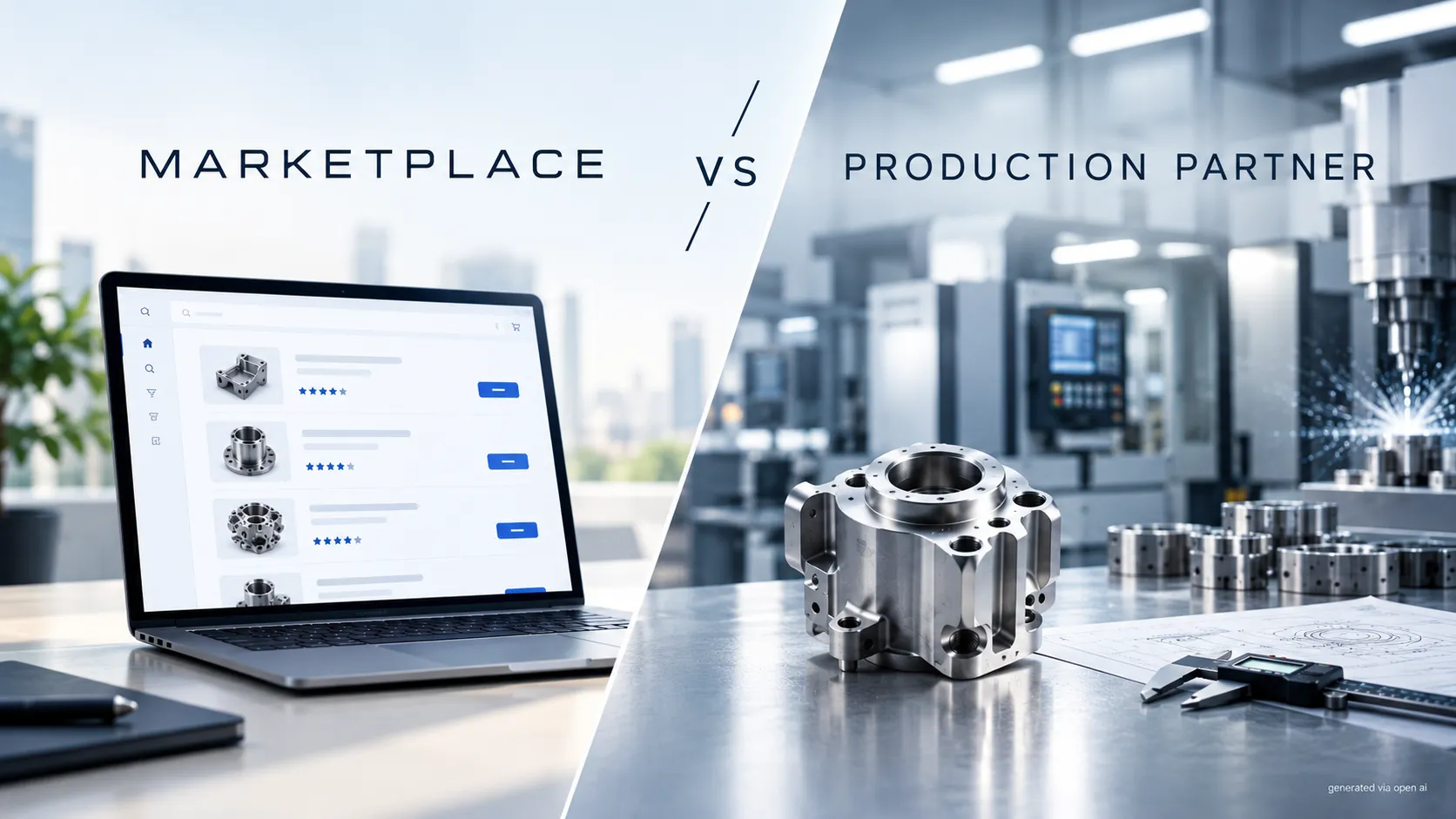
Replique’s platform gives OEMs a secure place to store those part designs, plus a network of more than 450 production partners to print from. Whether an order calls for a handful of parts or just one, the network can produce it easily. The platform routes each request to whichever partner is best placed to fulfil it. The manufacturer never needs to run its own print farm or hold a single unit of physical stock.
CNC machining, as well as other technologies, works the same way for parts where that’s the better process — no tooling investment either. But 3D printing is the one the directive explicitly protects, which is why it’s the focus here.

Why this fits a long spare-parts window specifically
Rather than gambling on warehouse space today for demand that might or might not materialise, an OEM keeps a validated digital file instead. It produces the part exactly when a repair calls for it, close to wherever that repair is happening. The obligation stays manageable for its full duration — whether that’s seven years or ten, depending on the product. None of the cost and risk gets front-loaded into the first couple of years after an OEM discontinues a product.
What this looks like in practice
Picture a ten-year-old refrigerator with a cracked door hinge bracket. Refrigerating appliances sit squarely in Annex II, so the OEM must legally keep it repairable. The OEM retired the original injection-moulding tool for that one bracket along with the model years ago. Building a new one just to serve the handful of units still in the field doesn’t add up economically. With a digital inventory, the OEM keeps the validated CAD file instead of the tool. When a repair request comes in, a qualified partner 3D-prints the bracket, checks it against the original spec, and ships it to wherever the fridge needs servicing. There’s no mould to rebuild and no minimum batch to justify.
That’s the pattern behind most of the value here. Part availability shows up directly in customer satisfaction, retention, and the willingness of a customer to buy from the same brand again. Under the Right to Repair Directive, that pattern isn’t optional anymore — it’s a legal expectation. The OEMs getting ahead of it now are turning a compliance deadline into a point of difference.
Ready to future-proof your part strategy?
See how a digital inventory keeps you compliant without the warehouse.Where the directive still falls short — and why that’s an opportunity
None of this adds up to a complete right to repair. Coffee machines, printers, furniture, clothing, toys: plenty of everyday products people struggle to get fixed still sit outside Annex II, with no spare parts obligation attached at all. That’s expected to change as the EU’s newer Ecodesign for Sustainable Products Regulation rolls out broader, cross-category repairability rules. Groups like Runder Tisch Reparatur, a German coalition pushing for a more complete right to repair, are already flagging where today’s rules still come up short.
For OEMs, that trajectory matters more than today’s exact scope. Annex II has already grown once, and it will grow again. Each expansion brings back the same problem this article opened with: years of spare parts to guarantee, for demand nobody can forecast. Building digital inventory and on-demand production now turns the next expansion into a non-event instead of a scramble, even for parts that go beyond what the law strictly requires today. That head start is the real competitive edge on offer here.
FAQ
What is the EU Right to Repair Directive?
Directive (EU) 2024/1799 sets common rules obliging manufacturers to repair certain product categories and provide spare parts and repair information at a reasonable price. It also supports consumers who choose repair over replacement, including through a one-year extension of the legal guarantee.
Does the directive really allow 3D-printed spare parts?
Yes. The directive explicitly prevents manufacturers from blocking independent repairers who want to use second-hand or 3D-printed spare parts. The only condition is that those parts meet applicable safety and intellectual property requirements.
Which products are currently covered?
Annex II of the directive currently lists categories such as washing machines, refrigerators, electronic displays, vacuum cleaners, mobile phones, tablets, and servers. The European Commission expects this list to expand over time.
When does the obligation to repair start applying?
Member states have to apply the directive from 31 July 2026. From that date, manufacturers must repair covered products even if the consumer bought them before that date.
How long do OEMs have to guarantee spare parts availability?
It varies by product category. Obligations can run for up to ten years after the last unit of a product reaches the market.
Getting started with digital inventory
How does a digital inventory of spare parts actually work?
OEMs store part designs securely as digital files instead of physical stock. When a repair request comes in, the platform sends the file to a qualified production partner. That partner prints, checks, and ships the part — no warehouse space used until someone actually needs it.
Is on-demand 3D printing actually cost-effective compared to warehousing?
For low-volume, unpredictable, long-tail parts — exactly the profile a multi-year repair obligation creates — yes. The per-part cost of 3D printing can be higher than mass production. But once you factor in warehousing, obsolescence, and minimum order quantities, on-demand production is usually cheaper over the life of the obligation.