
Obsolescence Management in Rail: How Operators Secure Spare Parts Supply
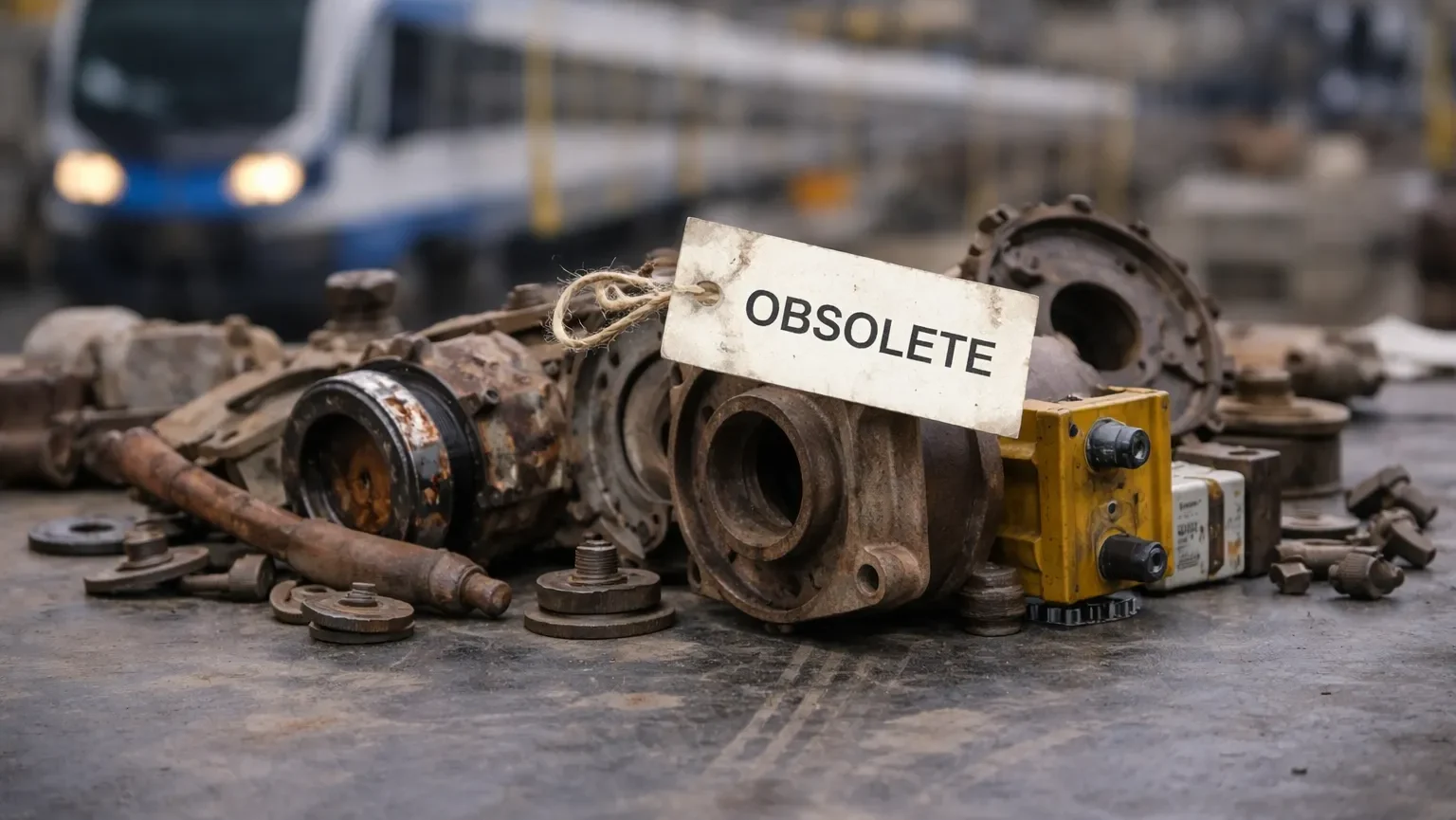
Obsolescence management in rail is no longer a niche maintenance topic. For operators running long-life fleets, securing supply for obsolete rail parts has become a core part of keeping vehicles in service, reducing downtime risk, and building a more resilient spare parts strategy.
At some point, nearly every rail operator faces the same situation: a part is still needed, but it is no longer available through the usual supply chain.
The original supplier has stopped production. Tooling has been scrapped. The product line was discontinued years ago, and the internal knowledge of who used to handle sourcing is gone. The part itself may be small and inexpensive. The operational impact of not having it is anything but.
That is exactly where obsolescence management in rail matters: identifying risks early and establishing a supply strategy before a sourcing gap turns into a service problem.
Most obsolete parts do not become a problem overnight. They become a problem when the supply route disappears before an alternative has been qualified.
The good news is that most obsolescence risks do not appear overnight. With the right process, they can be identified early and addressed before they disrupt operations.
What obsolescence management means in rail
In the rail industry, obsolescence rarely means that a part is physically worn out. It means the part can no longer be sourced through conventional channels even though the train it belongs to remains in active service.
This can happen for several reasons:
- The original manufacturer has discontinued the product line
- The supplier has gone out of business or has been acquired
- Tooling has been scrapped, making low-volume re-production uneconomical
- Regulatory changes have made the original specification non-compliant
- Component-level changes mean a previously compatible part is no longer interchangeable
In all of these cases, the demand remains real. What has changed is that the supply chain that once supported the part no longer does.
The mismatch is structural. Rail vehicles are designed for decades of service, while supplier product lifecycles are often much shorter. This is why obsolescence management is not a one-off task but an ongoing supply discipline.
That long asset lifetime is one of the core reasons the issue matters so much in rail. Vehicle lifecycles frequently extend well beyond the active commercial lifecycle of the original components and subsystems used in them.
Why the problem keeps getting worse
The challenge is not new. What has changed is the scale and speed at which it appears.
Fleet age and variety
Many operators manage mixed fleets that span multiple generations of technology. Older vehicles are often the hardest to support, but they may still be essential to daily operations while replacement programmes remain years away.
As fleets stay in service longer, retrofits, variant configurations and discontinued original parts increase the number of unique components that require active supply management — often faster than the maintenance organisation can keep pace with.
Supplier consolidation
The supply base for rail components has become narrower. Mergers, acquisitions, and market exits mean fewer suppliers for niche requirements. When one supplier discontinues a part, there may be no ready alternative.
Minimum order quantities
Even when a supplier can still produce a part, they may only offer it in volumes that do not match actual demand. That forces operators to choose between excessive stock and recurring supply risk.
The hidden risk: Obsolescence is often only discovered when a reorder fails. At that point, the time needed to find an alternative source, redesign the part, or validate a new manufacturing route can already be measured in months.
The four phases of obsolescence management
Effective obsolescence management typically moves through four phases. The earlier an at-risk part is identified, the more options remain available and the lower the overall cost of resolution.
Identification & monitoring
Creating visibility across the parts portfolio: which rail spare parts are at risk, which suppliers are flagging discontinuation, and which components are already approaching last-time-buy windows.
Impact assessment
Not every obsolete part carries the same risk. Prioritising by criticality, failure frequency, stock level, and operational consequence focuses effort where it matters most.
Strategy selection
For each at-risk part, selecting the right response: last-time buy, redesign, alternative sourcing, reverse engineering, or on-demand manufacturing via additive methods.
Implementation & documentation
Executing the selected route, documenting the process, and making sure the part can be reordered consistently without restarting qualification from scratch.
In practice, many organisations are still strongest in the first two phases. The real challenge is moving from visibility to repeatable execution.
Strategies for securing rail spare parts supply
There is no single answer to obsolescence. The right response depends on the part’s criticality, volume, technical complexity, compliance requirements, and the time available. Strong programmes usually combine several approaches.
Last-time buy (LTB)
When a supplier announces end-of-life, operators can place a final bulk order to cover expected demand over the remaining vehicle lifetime. This works when demand can be forecast with confidence and storage is practical. The downside is tied-up capital and the risk that usage patterns change.
Alternative supplier qualification
Finding a new source for an existing specification can create a durable long-term solution. The challenge is that qualifying an alternative supplier for a low-volume rail spare part is often time-consuming and difficult to justify commercially.
Re-engineering and redesign
When a direct replacement no longer exists, redesigning the part or the surrounding assembly may be the only viable path. This can permanently solve a supply issue and sometimes improve performance or manufacturability at the same time.
On-demand manufacturing
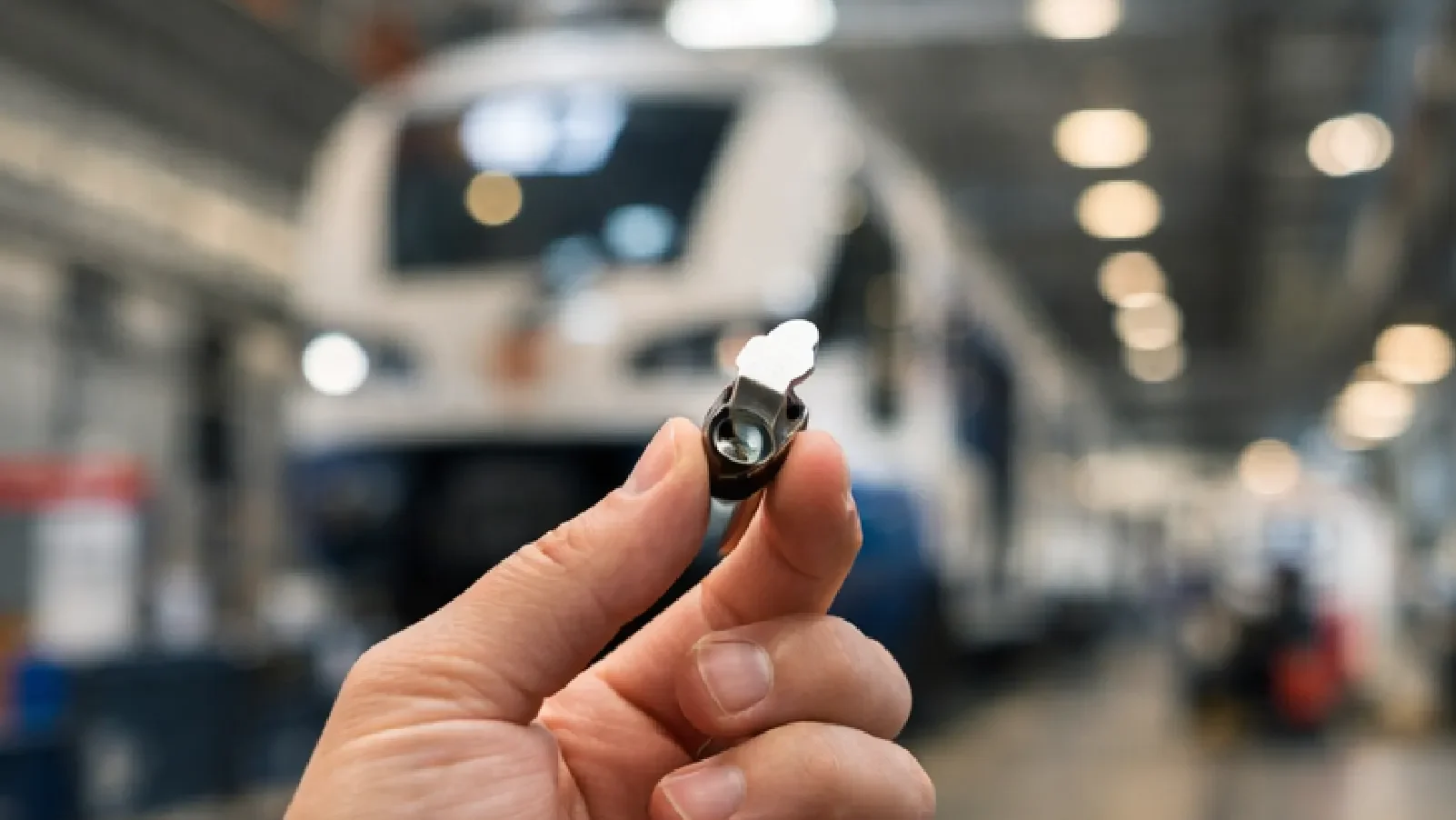
For parts that can be reproduced from technical documentation or rebuilt through reverse engineering, on-demand spare parts manufacturing can remove the dependency on a traditional supplier altogether. The part is produced when needed, in the quantity needed, without tooling investment or high minimum order quantities.
On-demand manufacturing is particularly effective in obsolescence cases because it does not require a supplier who already makes the part. It only requires a qualified route to make it when needed.
Where additive manufacturing fits in
3D printing and additive manufacturing are increasingly important in rail obsolescence management. Not because they replace every other method, but because they directly address the constraints that make obsolete rail parts so difficult to replace.
- No tooling required – Conventional manufacturing often depends on moulds, dies, or fixtures that may no longer exist. Additive manufacturing starts from digital data.
- No minimum order quantities – Parts can be produced in the quantity actually needed instead of forcing a choice between over-stocking and under-sourcing.
- Fast response for low volumes – For unexpected failures, the time from order to delivery can be significantly shorter than conventional re-sourcing.
- Reverse engineering from physical samples – When original drawings are missing, parts can be scanned and rebuilt digitally through engineering and reverse-engineering services.
- Digital inventory instead of physical stock – Once a part is validated, the digital file and qualified process can be retained for future repeat orders.
At the same time, additive manufacturing is not the right choice for every part. Material requirements, load cases, geometry, tolerances, and certification rules all matter. In rail, compliance topics such as fire behaviour requirements under EN 45545-2 also play an important role depending on the component category.
The strongest use cases are often non-safety-critical structural parts, housings, covers, brackets, interior fittings, and maintenance tooling. For more demanding components, additive manufacturing is frequently combined with machining and post-processing, and in some cases CNC machining is the better primary route.
This low-volume logic is also increasingly visible across the rail sector itself, where additive manufacturing is being used to solve spare parts challenges that do not fit traditional minimum-order economics. See one example from Alstom.
Have a part that is becoming difficult to source?
A short feasibility check can show which manufacturing route makes sense — additive, CNC, or a combination of both.Building a proactive portfolio approach
Moving from reactive sourcing to proactive obsolescence management is mainly a process shift rather than a technology shift. It requires three elements that most organisations already have in some form, but rarely connect well enough.
Accessible and current parts data
Operators need visibility into what is in the fleet, what is used regularly, what is already flagged as end-of-life, and where workarounds are already in place. Without that, obsolescence management stays reactive.
A clear prioritisation framework
Not every at-risk part deserves the same effort. A simple matrix of criticality versus supply security is often enough to identify which parts deserve immediate action and which can be managed more lightly.
A manufacturing partner that can handle variety
Obsolescence cases rarely look the same twice. One part needs a material substitute. Another needs reverse engineering. A third needs a hybrid route with additive manufacturing and post-processing. The real bottleneck is often not identifying the issue, but having a reliable path to solve it repeatedly.
This is where Replique’s platform fits. Instead of coordinating multiple vendors for every new case, operators can manage a broad range of obsolescence scenarios through one workflow. Parts data is retained, manufacturing routes are documented, and repeat orders can be triggered without rebuilding the process from the beginning.
From problem part to repeatable supply: the Replique approach
The starting point is usually a part that is already causing sourcing difficulty: a supplier that has stopped responding, a last-time buy that has been exhausted, or a component that is no longer available in a reasonable quantity or lead time.
From there, the workflow is clear: assess feasibility, define the manufacturing process, validate the result, and establish a repeatable supply route. That route may involve additive manufacturing, CNC, or both depending on the part.
The key difference is that the solution does not depend on finding a supplier who already makes the part. It depends on building a qualified route to make it again when needed.
The bottom line: close the gap before it becomes critical
Obsolescence in rail is not a question of whether it will happen. It is a question of when, and how prepared the organisation is when it does. The parts most likely to create disruption are usually already known: ageing fleet components, niche parts from discontinued product lines, and single-source items with no validated alternative.
The organisations that manage obsolete rail parts best treat the topic as a supply strategy challenge rather than a procurement emergency. They identify risks early, apply proportionate responses, and create manufacturing routes that can be reused when demand returns.
A practical first step is simple: review the parts that have repeatedly caused sourcing issues over the last 12 to 18 months. In most cases, the same problem categories surface again and again. Those are the parts worth addressing before the next failed reorder.
Ready to review your at-risk parts portfolio?
Bring your top obsolescence cases and Replique will assess the most suitable supply route.FAQ – Obsolescence management in rail
What is obsolescence management in the rail industry?
Obsolescence management is the process of identifying parts that are at risk of becoming unsourceable because suppliers have discontinued them, tooling has been scrapped, or the original supply chain has broken down — and putting a replacement strategy in place before operations are affected.
How early should rail operators start managing obsolescence risk?
As early as possible. The most useful signals are end-of-life notices, last-time-buy windows, and recurring sourcing problems on older platforms. Regular portfolio reviews remain one of the most effective ways to get ahead of supply risk.
Is a last-time buy always the right response to a discontinued part?
Not always. Last-time buys can make sense, but they also tie up capital and storage capacity. For low-volume or irregular demand, an on-demand manufacturing model can be more flexible and less risky.
Can 3D printing really replace conventionally manufactured rail parts?
For many part categories, yes. Common fits include housings, covers, brackets, interior fittings, and maintenance tooling. More demanding components may need additional machining, post-processing, or a different manufacturing route altogether.
What if there are no technical drawings for the original part?
This is common with older fleets. Physical samples can be scanned and reverse-engineered into digital manufacturing data. Once validated, the part can be reordered consistently through an on-demand process.
How does Replique help with obsolescence cases?
Replique supports the full process from feasibility assessment and route selection to qualified manufacturing and documentation for repeat orders. That makes it easier to solve obsolescence cases without restarting sourcing and qualification every time.