Manufacturing trends in 2026 are not about adopting the next technology. It’s about making different technologies work together. Over the past few years, many companies have realized that efficiency alone doesn’t protect them. Volatile demand, shorter product lifecycles, geopolitical uncertainty, regulatory pressure – all of it exposes how rigid traditional production setups can be. The question is no longer just how do we produce? It’s increasingly how do we stay adaptable without losing control.
Agility Means Reducing One-Way Decisions in 2026
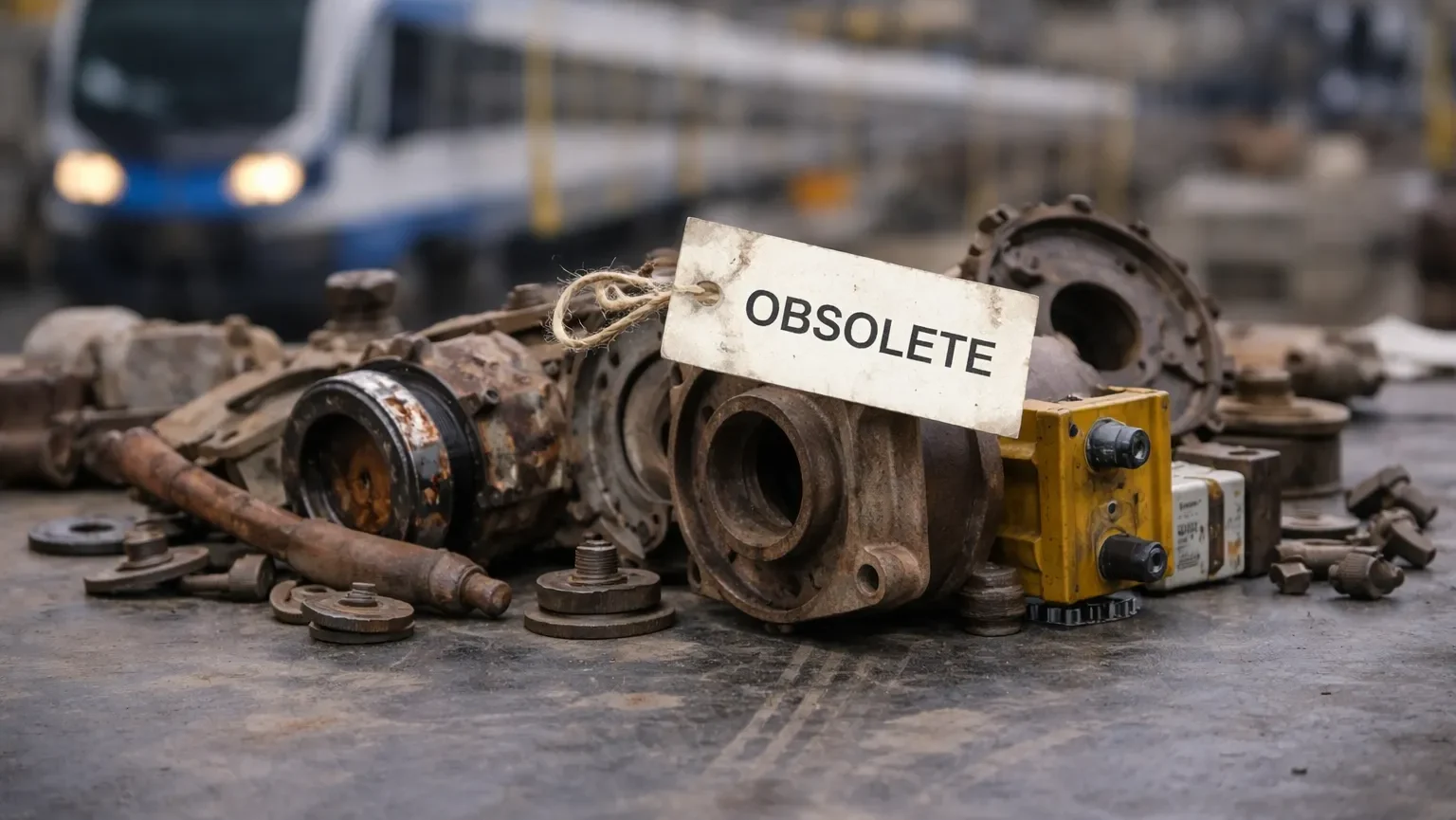
That’s where agility becomes relevant. For decades, manufacturing was optimized around predictability. Tooling investments, long-term supplier contracts, minimum order quantities, all of it made sense in stable markets. But those same decisions become constraints when demand fluctuates, or products evolve faster than expected.
Agility is often equated with speed. In practice, it’s something else: the ability to absorb change without destabilizing the system. To adjust capacity, routes or technologies without compromising quality or reliability.
3D printing fits into this picture not as a revolutionary replacement for conventional manufacturing, but as a structural lever within a more flexible system. No tooling. Smaller batches. Late-stage design adjustments. Combined with digital inventories, production becomes something that can be activated when needed rather than forecasted months in advance.
3D Printing and Conventional Manufacturing: A Practical Balance
The idea that additive manufacturing would replace traditional production has largely given way to a more grounded reality. Conventional processes remain indispensable where volumes are high, tolerances are very tight and cost efficiency dominates.
Additive manufacturing proves its value elsewhere – when geometries are complex, volumes are uncertain, or availability matters more than pure unit cost.
The shift isn’t about choosing one over the other. It’s about building production models where parts can move between technologies as conditions change. That optionality is what makes systems more resilient.
It’s less a technological revolution and more a structural adjustment.
Platforms as a Control Layer of Manufacturing in 2026
Managing multiple suppliers across different technologies quickly becomes complex. One supplier lacks capacity. Another lacks certification. A third cannot meet the required lead time. Individually, these issues are manageable. Together, they create friction, delay, and uncertainty.
This is where platforms act as a true control layer. Rather than locking production into fixed pathways, platforms allow companies to evaluate multiple manufacturing options in parallel. Decisions about how and where a part is produced can be adjusted based on availability, urgency, cost, or sustainability considerations.
Platforms consolidate design data, qualification status, available technologies, and capacity visibility into one structured environment. Instead of coordinating decisions manually across emails, calls, and spreadsheets, companies gain a clear overview of distributed production paths. This transparency turns complexity into a strategic advantage.
Supporting Decisions With AI
Aritificial Intelligence (AI) is often framed around generative design. That’s visible and impressive — but its broader impact within the manufacturing trends for 2026 lies in decision support.
Evaluating cost, lead time, risk and availability across additive and conventional routes becomes faster and more data-driven. In additive manufacturing, this reduces failed builds and shortens iteration cycles. Across production networks, it improves planning accuracy. It doesn’t replace human judgment. It reduces blind spots. Read more about AI in 3D printing.
Quality Enables Flexibile Manufacturing
Flexibility only scales when quality is consistent. Certification, traceability and documented processes are non-negotiable. Switching between suppliers or technologies only works if standards are aligned. In that sense, quality is not in conflict with agility. It is what allows agility to function without introducing risk.
Manufacturing Trends in 2026 act as a System
The defining shift in 2026 is not about adopting additive manufacturing, AI or platforms individually. According to the World Economic Forum, manufacturers are increasingly adopting a systemic, integrated approach, coordinating digital transformation, sustainability and operational resilience rather than focusing on isolated technologies. When integrated intentionally, this creates production models that are more adaptable and less dependent on fixed assumptions.
At Replique, we help companies move from isolated production decisions to connected, quality-assured manufacturing networks that can adapt without losing control. Because manufacturing in 2026 means, that competitive advantage is no longer built on individual technologies, but on how well the entire system works together.