Cancer is one of the leading causes of death among children and adolescents in Europe. During treatment, young patients face increased stress, exacerbated by physical inactivity, fatigue, and reduced quality of life. To address these challenges, the Kolibri Project was initiated at the Childhood Cancer Center Mainz. The aim of the project is to research and promote exercise therapy to support young patients in their fight against cancer.
Activity Sensors for Exercise Therapy
To measure the impact of physical activity on health, special accelerometers (activity sensors) are used in exercise therapy for children and adolescents with cancer. The application of these sensors during therapy in young patients demands high standards. The product should be suitable for continuous wear over several days without disturbing the child’s daily life, making it usable both at home and in a hospital setting. Furthermore, the material must withstand frequent disinfection and ideally be appealing to young patients.
“We needed an optimal solution for integrating activity sensors in pediatric oncology exercise therapy,” comments Elias Dreismickenbecker, a research associate at the Childhood Cancer Center Mainz. “To achieve that, we had to have a technology that would enable us to efficiently produce relatively small quantities of customized sensor holders. From our research, it was apparent that Replique’s offering provided the perfect fit for our needs.”
3D Printing Custom Sensor Holders
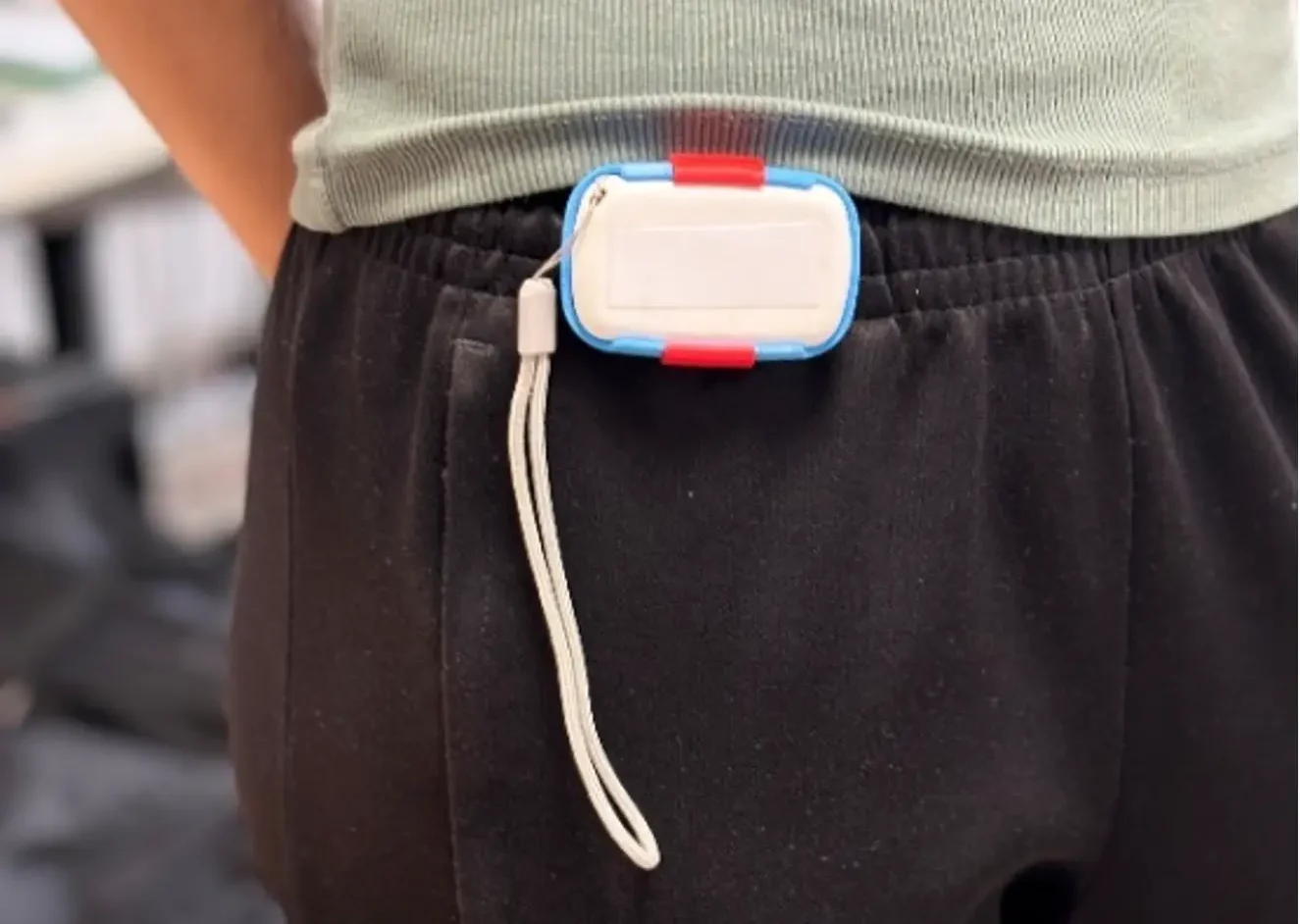
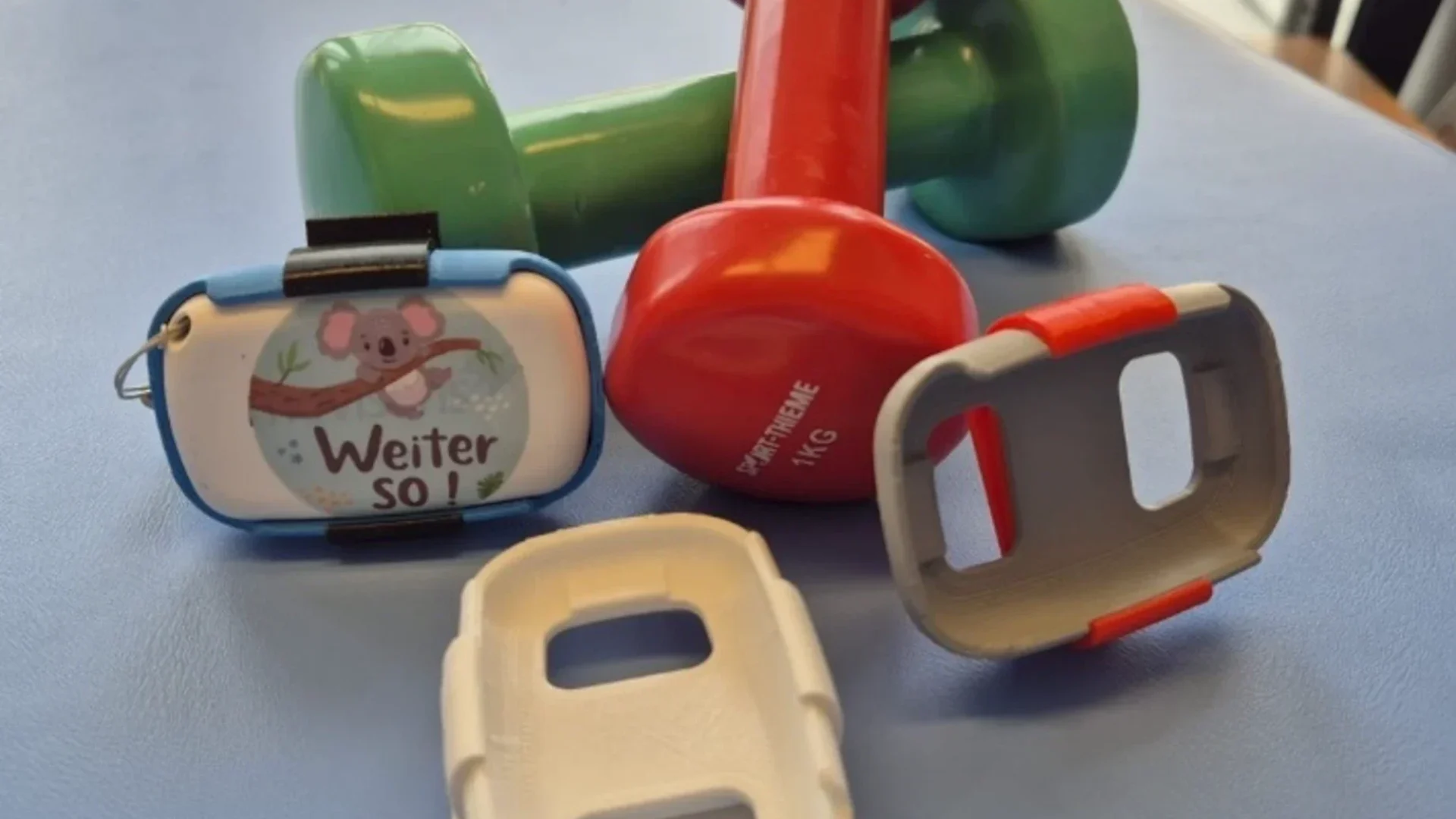
After discussions between the two parties to consider the specific requirements in more detail, Replique – which enables the production of 3D printed parts on-demand, anytime and anywhere, through a global, decentralized, and secure network – supported the Mainz facility by sponsoring a series of custom sensor holders in child friendly colors.
The company’s flexible production method incurs no additional costs for customized forms or fixtures for the relatively small quantities, while allowing for rapid design iterations.
Replique’s engineers developed the custom housings from scratch and produced them based on the dimensions of the accelerometers. This ensures that the devices can be securely and comfortably attached to the children’s bodies without restricting their movement. The versatile attachment options of the clips ensure a secure fit in various body positions without hindering everyday movements. This enables natural tracking of movements and activities over extended periods, optimizing the data collection of activity minutes and intensities both in clinical and home environments. The material choice for the holders allows for easy disinfection, making them suitable for clinical use.
“We are very pleased with our collaboration with Replique and the consistently positive feedback from all involved. During a pilot phase, we already observed an increase in data volume due to improved compliance, longer wear times, and better return rates for measurements. This significantly accelerates our research progress.”
— Elias Dreismickenbecker, University Medical Center Mainz
The 3D-printed holders consist of two different parts printed via fused deposition modeling (FDM). These can be combined in different colors depending on the patient’s preference.
The young patients are also positively impressed. Besides the high wearing comfort and optimized functionality of the holders through the two-component system, they have the option to choose from five different colors. This results in 25 color combinations, which further enhances acceptance among the young patients.
Based on these promising results, the accelerometer holders are now being used at the Childhood Cancer Center Mainz. If needed, the production volume can be easily scaled up through Replique due to the flexibility of 3D printing.
Small series, custom shapes, short lead times?
Talk to our team about your 3D printing project.“We are thrilled to have been able to support the Childhood Cancer Center Mainz smoothly and to contribute at least a small part in advancing this important research,” says Henrike Wonneberger, COO and Co-Founder of Replique. “While our primary focus is on industrial applications, we’re especially excited about projects like this that showcase the versatility of 3D printing. The ability to quickly produce customized small series without lead times offers significant benefits.”
3D-Printed Medals to Boost Motivation
Replique also made a valuable contribution to the EU-wide research project “FORTEe” led by the University Medical Center Mainz. In this project, 16 partners from eight EU countries cooperate to enable sports for children and adolescents with cancer and conduct joint research. A major focus of the project is on motivating and engaging the patients. Now, 3D printed medals are being used to give children additional identification with the program and their exercise therapy. Replique supported the design and production of the medals. These feature the FORTEe logo and were produced in two different colors using FDM 3D printing.
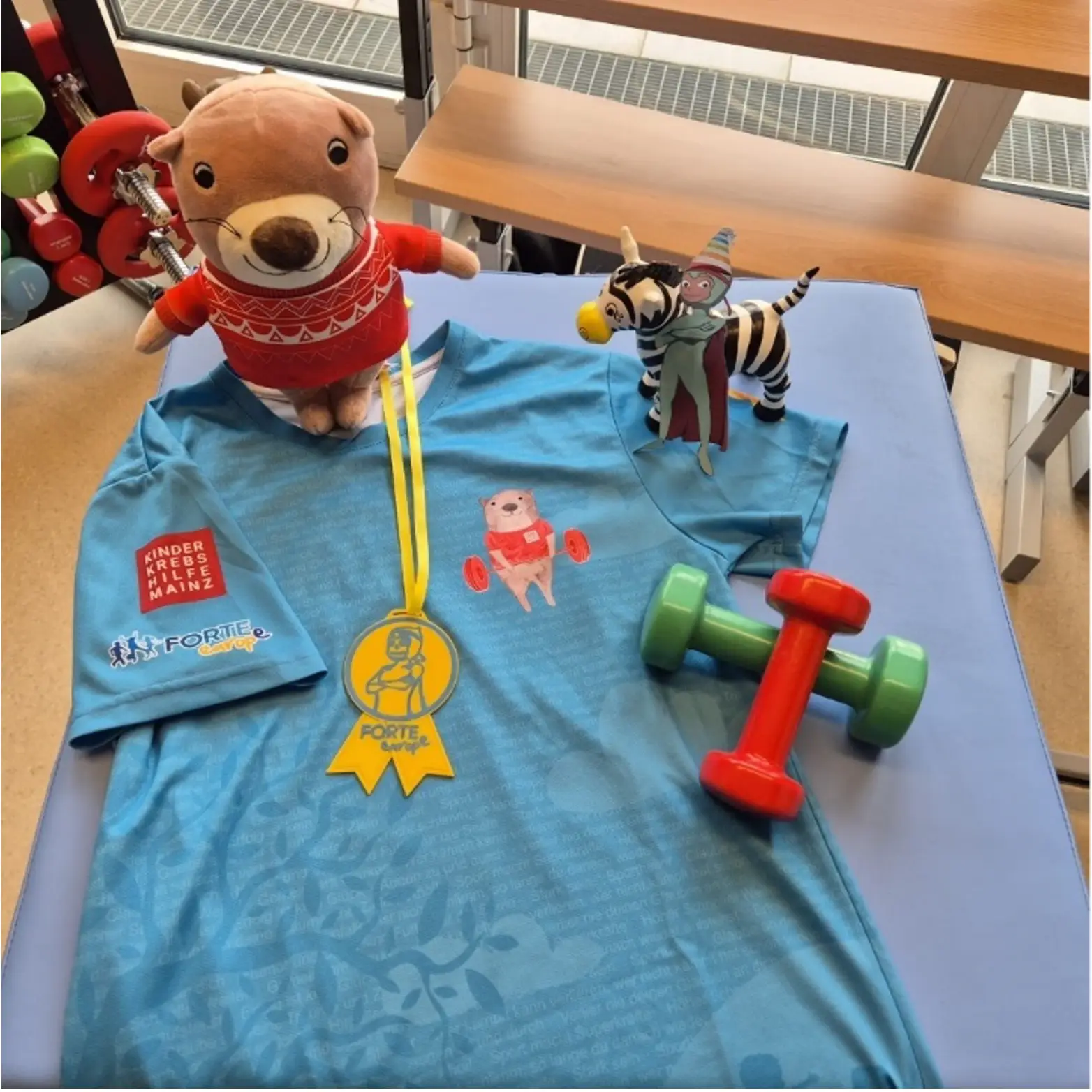
“This is an especially challenging time for the children. Exercise and motivation can play a crucial role in their well-being and quality of life. That’s why I’m particularly glad that the introduction of the medals provides an additional boost of motivation for the kids,” concludes Elias Dreismickenbecker.
FAQ
What is the Kolibri Project?
The Kolibri Project was initiated at the Childhood Cancer Center Mainz to research and promote exercise therapy for children and adolescents with cancer.
Why are accelerometers used in exercise therapy?
The activity sensors measure the impact of physical activity on young patients’ health and capture activity minutes and intensities in both clinical and home environments.
What requirements do the sensor holders need to meet?
They need to be suitable for continuous wear over several days, withstand frequent disinfection, not restrict the children in daily life, and ideally be appealing in design.
How were the sensor holders manufactured?
Replique developed custom housings from scratch based on the dimensions of the accelerometers and 3D printed them using FDM (fused deposition modeling) from two parts that can be combined in different colors.
What are the benefits of 3D printing for small production volumes?
Relatively small quantities incur no additional costs for customized forms or fixtures, while still allowing rapid design iterations and flexible scaling of production volume.
What is the FORTEe project?
FORTEe is an EU-wide research project led by the University Medical Center Mainz, involving 16 partners from eight EU countries to enable sports for children and adolescents with cancer and conduct joint research.
What role do the 3D-printed medals play in the FORTEe project?
The medals feature the FORTEe logo, were produced via FDM printing in two colors, and are meant to give children additional identification with the program and their exercise therapy, along with a boost of motivation.