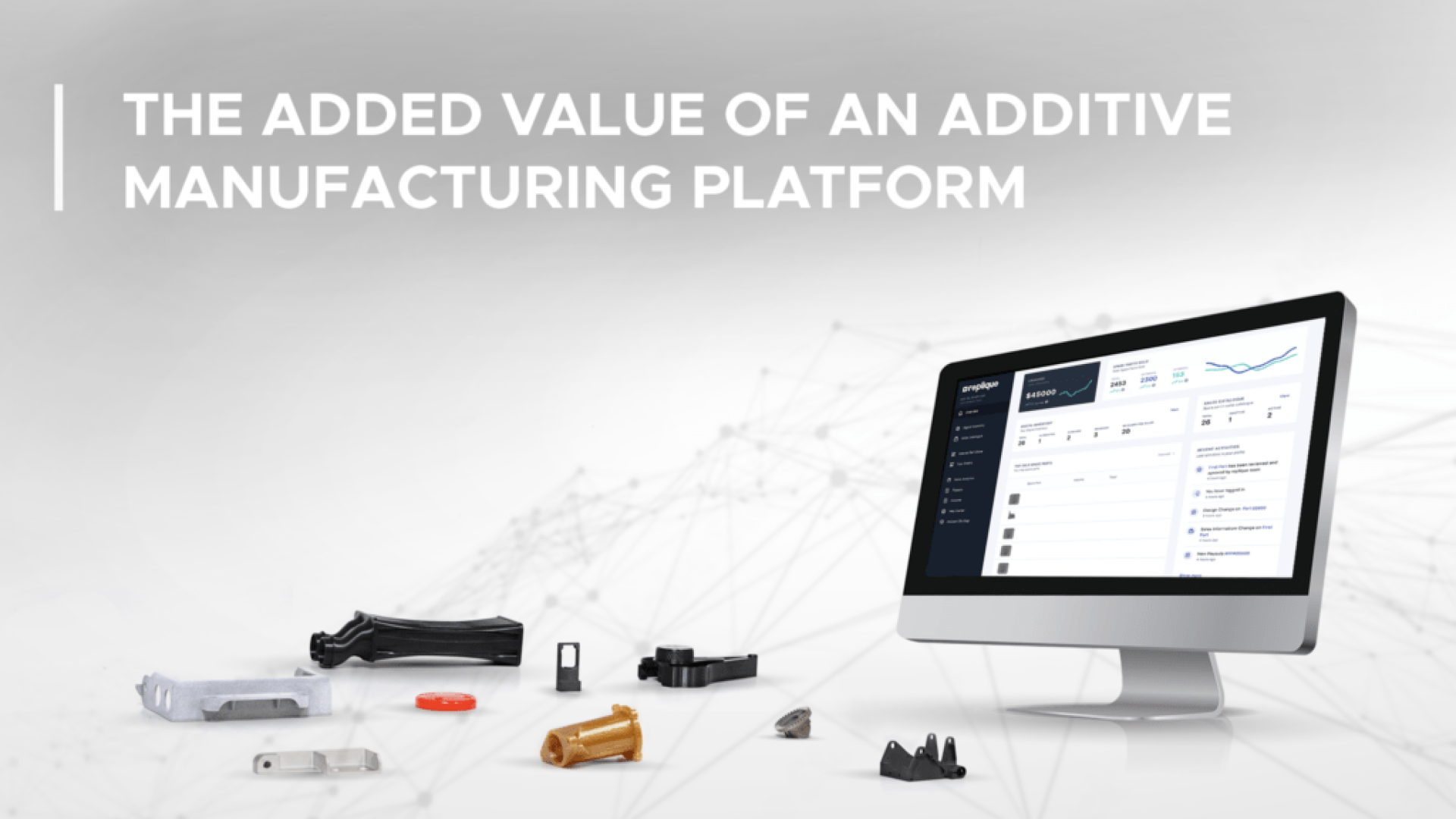
Additive manufacturing keeps finding its place in the production world – for prototyping, low-to-mid-size series, or full series production. It brings real advantages: design flexibility, low investment costs, less material waste. But to really make parts available anytime, anywhere, the technology needs to be paired with decentralized manufacturing. That’s what cuts lead times, shipping costs, and emissions, while opening up access to multiple locations and technologies at once. The easiest way to shift to decentralized manufacturing is choosing an additive manufacturing platform. Here’s why, in three key benefits.
Access to every technology, material, and post-processing option via one platform
Henry Ford, founder of the car company that bears his name, is famously said to have told a 1909 meeting that Ford could build cars in any color, as long as it was black. Back then, having no choice over color or material was acceptable. That’s no longer true today – customers expect a wide range of options on color, material, and more.
The same expectations apply to additive manufacturing. Plenty of different printing technologies, materials, and post-processing options already exist – but offering every possible material-technology combination in-house is close to impossible. Even building your own network of production partners to cover that range is a serious challenge; realistically, it would take dozens of partnerships.
This is exactly where an additive manufacturing platform earns its keep: its core job is bundling all those technologies, materials, and post-processing options into one place. Replique, the industrial-grade additive manufacturing platform, covers all the commonly used printing technologies, materials, and post-processing options, plus a few more specialized ones. If a technology, material, or post-processing option isn’t in the portfolio yet, Replique goes and finds a qualified partner and brings them into the production network.
Material and technology, sorted
Which material-technology combination does your part range actually need?Producing worldwide with a global 3D printing network
Conventional manufacturing produces centrally and ships parts around the world – partly because production machines there are usually limited to a single product or a narrow product range. On top of that comes staff training for each specific machine, plus the floor space and investment the machines themselves require.
Additive manufacturing flips that: a wide range of different products can come off the very same printer. That makes it possible to place printers around the world and produce parts close to the end consumer – one of the biggest advantages of an additive manufacturing platform. It saves shipping time and cost, reduces exposure to supply chain disruptions, and is more environmentally friendly on top.
Replique runs a global network of production partners and supports customers across six continents. The network currently counts more than 250 certified production partners worldwide – and keeps growing, as Replique continuously expands it with new technologies, materials, and locations based on customer demand. Since Replique’s largest customer base sits in Europe, most production partners are located there too, though the network is also growing noticeably in North America.
Quality assurance built into your additive manufacturing platform
When parts are produced externally and the print farm ships them straight to the end customer, quality gets hard to track – the parts never pass through the original equipment manufacturer’s (OEM’s) hands. That’s one reason some OEMs hesitate to go external and decentralized in the first place.
Replique keeps quality at the level OEMs expect in three ways:
High-quality service bureaus via the platform
Replique only works with service bureaus it’s confident can hit a certain quality bar – partly established through quality certifications. Most service bureaus in Replique’s network are ISO 9001 certified, a general quality management standard that many of Replique’s own customers explicitly require. About a third of network partners also hold industry-specific certifications, such as AS 9100 for aerospace or ISO 13485 for medical devices, which helps Replique match the right service bureau to a given customer request. Before onboarding a service bureau, Replique checks its processes and production quality, then keeps monitoring performance afterward – underperforming bureaus risk being removed from the network.
Encryption of production files
Most service bureaus work by receiving a 3D file, deciding on parameters themselves, and printing the part. Replique works differently: ready-to-print files, with parameters already locked in, are stored encrypted on the platform. That means you can expect the same print quality regardless of where or when a part is printed – and the encryption also protects the design owner’s intellectual property, since the files can’t be altered or printed without consent.
Because Replique uses encrypted, parameter-locked production files, the same part quality can be reproduced at practically any network location – regardless of which partner actually prints it.
A quality feature built into the platform
Through the platform, customers decide for themselves which quality checks a print farm has to run on their parts – measuring specific dimensions, taking photos, or running a functional test, for instance. Everything gets documented on the platform, so OEMs can see at any time whether the checks were carried out and what the results were.
Quality you can actually prove
Which quality checks should be non-negotiable for your parts?Getting the most out of additive manufacturing with an industrial 3D printing platform
An additive manufacturing platform is what actually lets you use the full potential of the technology. It delivers the general benefits of additive manufacturing – design flexibility, low investment costs, reduced material waste – and adds the benefits of decentralized production on top: lower lead times, costs, and emissions.
Replique’s industrial additive manufacturing platform adds a third layer beyond that: global coverage, access to every technology, material, and post-processing option, and quality assurance – all through a single platform.
FAQ
What’s the main advantage of an AM platform over building your own partner network?
A platform bundles already-vetted service bureaus for practically any material-technology combination. Building and maintaining a network with that same breadth yourself would take dozens of individual partnerships.
How does a platform keep quality consistent across every location?
Through certified service bureaus, encrypted production files with locked-in parameters, and a documented quality-check feature that customers configure themselves.
Why is decentralized production even possible with 3D printing?
Because a single 3D printer, unlike conventional manufacturing equipment, can produce many different products without needing a dedicated machine or tooling for each one.
What happens if a platform doesn’t yet offer a technology or material you need?
At Replique, that triggers a targeted search for a qualified partner with the right technology or material, who then gets onboarded into the production network.
Quality and security in practice
What certifications are common among production partners?
Most service bureaus in Replique’s network are ISO 9001 certified. About a third also hold industry-specific certifications, such as AS 9100 for aerospace or ISO 13485 for medical devices.
How does a platform protect the intellectual property behind part designs?
Through encryption of production files: ready-to-print files with locked-in parameters can’t be altered or printed without the rights holder’s consent.