It’s rarely the big components that bring things to a halt.
More often, it’s a small, hard-to-source part that determines whether a train gets back into service on time: a bracket, a cover, a clip, a sign, a fastener. It sounds trivial – but in procurement, it can become surprisingly complex.
That’s exactly why 3D printing and additive manufacturing for rail spare parts has long moved beyond a purely innovation-driven topic. Not because anyone wants to “3D print everything” – but because it’s a pragmatic option for getting parts quickly and on demand when traditional supply chains start to break down.
“Who can make this? How fast? What material? Who handles post-processing? And can we get the same thing again next year?” – If that question sounds familiar, you already know: the additive manufacturing itself usually isn’t the hard part.
The hard part is turning it into a reliable, repeatable supply process. That’s what makes 3D printing actually work for the rail industry.
Why rail spare parts are so often a challenge
The rail industry operates under two fundamental constraints that aren’t going away:
1) Vehicles run for decades – supply chains don’t
Trains stay in service for 20, 30, sometimes even more years. Suppliers, tooling, production lines and product portfolios change far more quickly. Over time, parts get discontinued, tools disappear, and the people who knew how to source them move on. The institutional knowledge behind a reliable supply chain quietly vanishes.
2) High variety, low volumes
Different vehicle series, operator requirements, regional and interior variants, retrofit programmes – the parts landscape is enormous. And yet demand for any individual part is often small and spread over years:
- 5 units now
- 10 units in nine months
- 3 units next year
- plus “urgent” whenever something fails
In practice, this leads to long lead times for niche parts, minimum order quantities that don’t match actual demand, growing safety stocks “just in case” – and the risk of a standstill because one small part is blocking a train’s return to service.
What 3D printing actually changes for rail
Additive manufacturing hits its stride exactly where traditional manufacturing struggles most:
- Small quantities without heavy tooling costs
- Fast turnaround at low volumes
- Variants and modifications without full re-tooling
- Obsolescence cases where conventional sourcing has essentially stopped working
Successfully printing a part once is rarely the real challenge. The real task is building that into a repeatable process.
The real challenge: scaling to industrial standards
Rail spare parts are rarely a case of “print and done.” In practice, the full picture almost always includes:
- The right material selection (sometimes with strict compliance requirements)
- Stable process parameters and repeatability
- Inspection and documentation frameworks
- Post-processing such as machining, surface finishing, coating or balancing
- Consistent quality across sites and over time
Most initiatives don’t fail because of the technology – they fail because of everything around it. The supply chain becomes fragmented.
Every new part raises a fresh set of questions: Who prints it? Who post-processes it? Who inspects it? Who documents it? And what happens when the same part is needed in a different country – or five years from now?
One place, not supplier-hopping
This is exactly what Replique is built for. The platform means rail teams don’t have to kick off a new supplier project every time they need a spare part. Instead of coordinating multiple vendors and interfaces, the entire workflow runs centrally – from initial enquiry through to production and delivery.
And it’s not just about one technology. Sometimes 3D printing is the right answer. Sometimes it’s CNC machining. Sometimes casting or injection moulding makes more sense. And often the best solution is a combination – print, machine, coat. The goal is simple: the right manufacturing process for each part, without adding complexity on the customer side.
Got a specific part in mind?
A quick feasibility check will show which manufacturing route makes sense.Which rail spare parts are the best fit for 3D printing?
Not every part should be made additively. The strongest candidates tend to be:
- Obsolete or hard-to-source parts – When the original supplier is gone, lead times are unrealistic, or sourcing keeps escalating, 3D printing can restore availability – especially at low volumes.
- Small series and retrofit programmes – Low-volume runs are often the sweet spot: too small for tooling-heavy processes, but too important to wait on.
- Maintenance-critical small parts – Covers, brackets, clips, fasteners, small housings – often inexpensive individually, but critical for keeping trains available.
- Repair parts instead of full assembly replacements – When the market only offers complete assemblies but only one component has failed, producing that individual part can significantly speed up repairs.
- Workshop and depot aids – Fixtures, gauges, templates, protective parts – sometimes the biggest impact doesn’t come from the spare part itself, but from the tooling that makes maintenance faster and safer.
Real-world examples: Replique × Alstom
Three cases that illustrate different value patterns – from global series supply to repairing a single component instead of replacing an entire assembly.
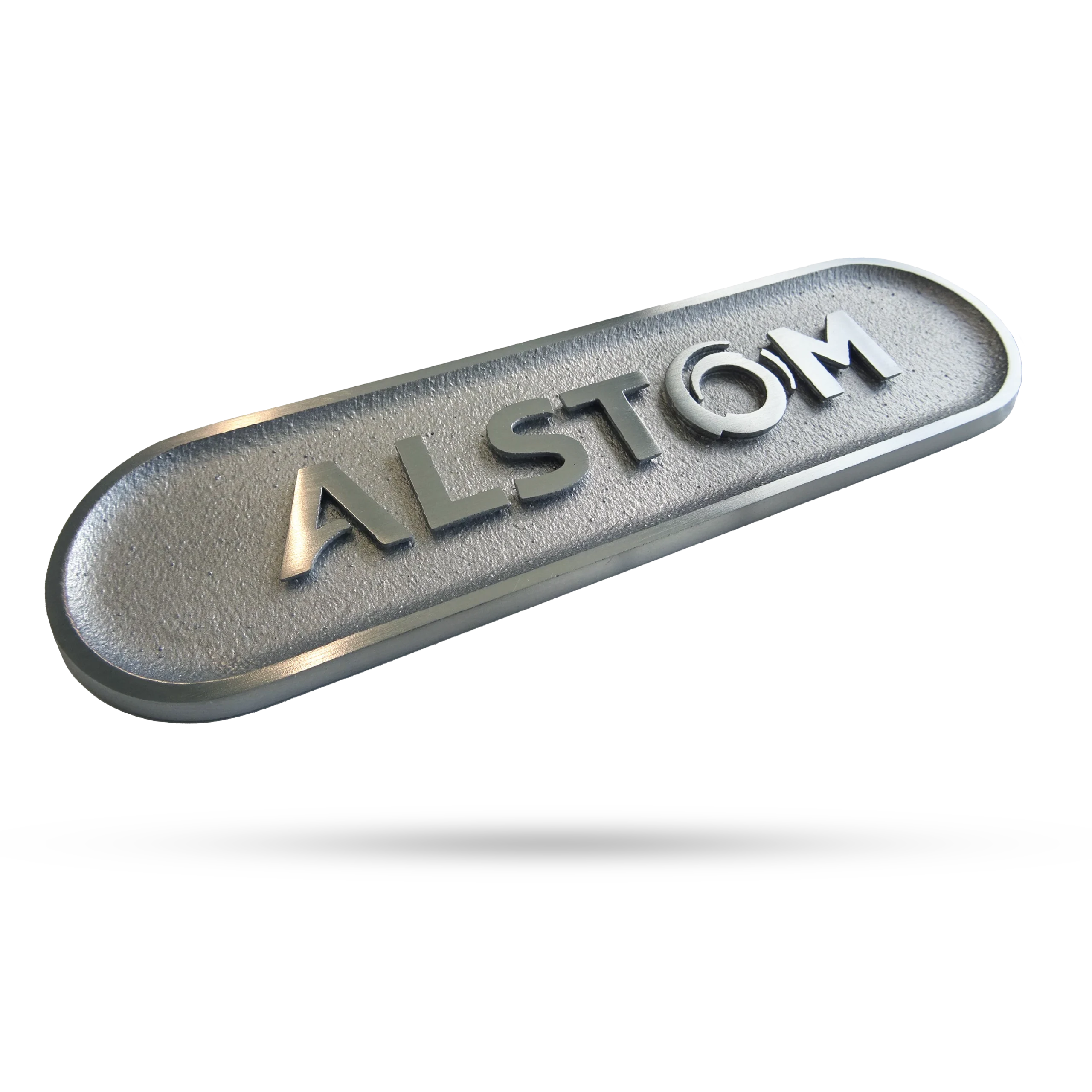
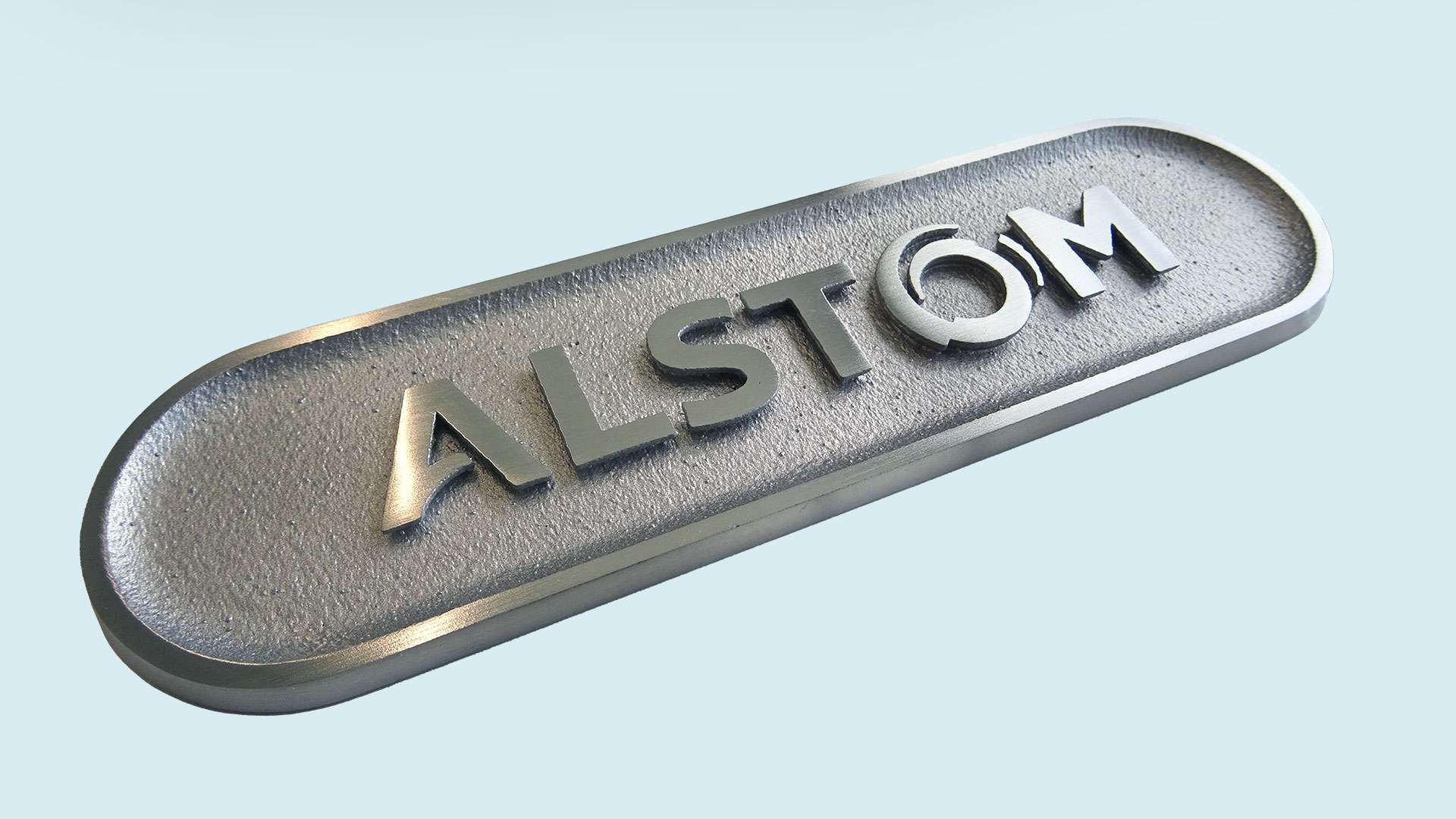
1) Branding plates for new train series: globally available, consistently delivered
Branding plates look like a straightforward part at first glance. In practice, they’re surprisingly demanding – particularly when they need to be available consistently over an extended period as part of a new train series. It’s not just about dimensions and fit; appearance, feel and repeatability all matter.
For Alstom, Replique built a setup designed not for a one-off order, but for recurring, near-series demand – so that branding plates can be deployed consistently worldwide. That requires more than just printing: the entire process needs to be clearly defined, from data and design setup through to manufacturing route, post-processing steps, quality inspections and controlled approvals.
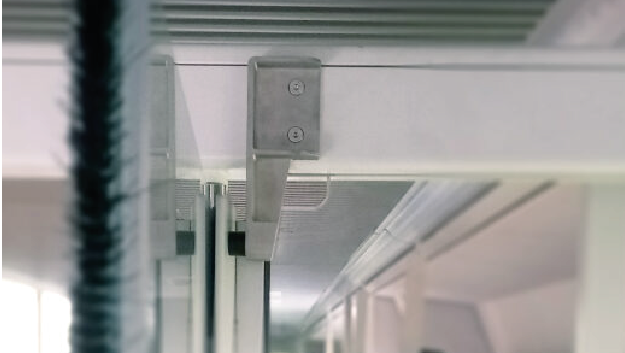
2) Door stopper for a partition door: fast turnaround, repeatable supply
Alstom needed a metal door stopper for a partition door on a train project. The challenge was fast, production-ready availability: low volumes, a tight timeline, and a result that could be properly inspected and approved. Replique handled material and process selection, validated fit and function, and managed production through its partner network.
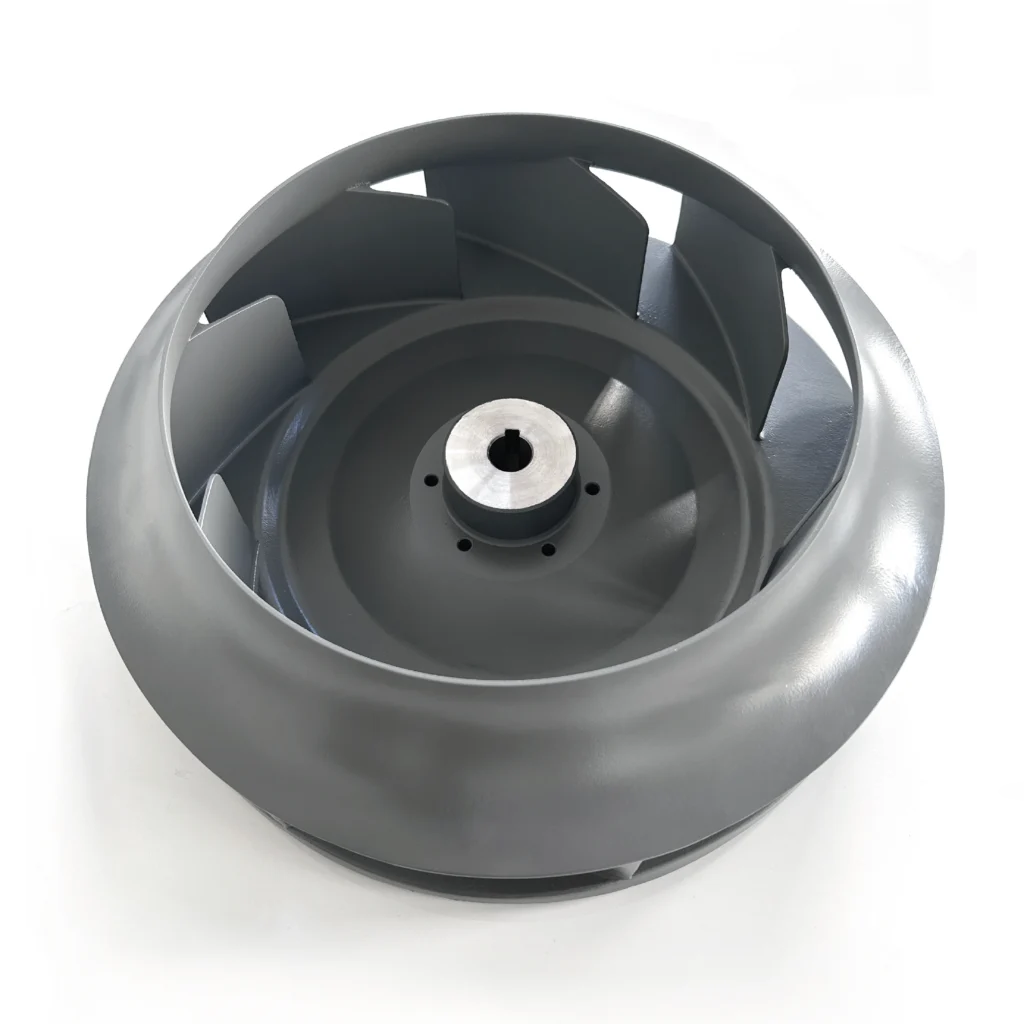
3) Impeller replacement: repair rather than full assembly swap
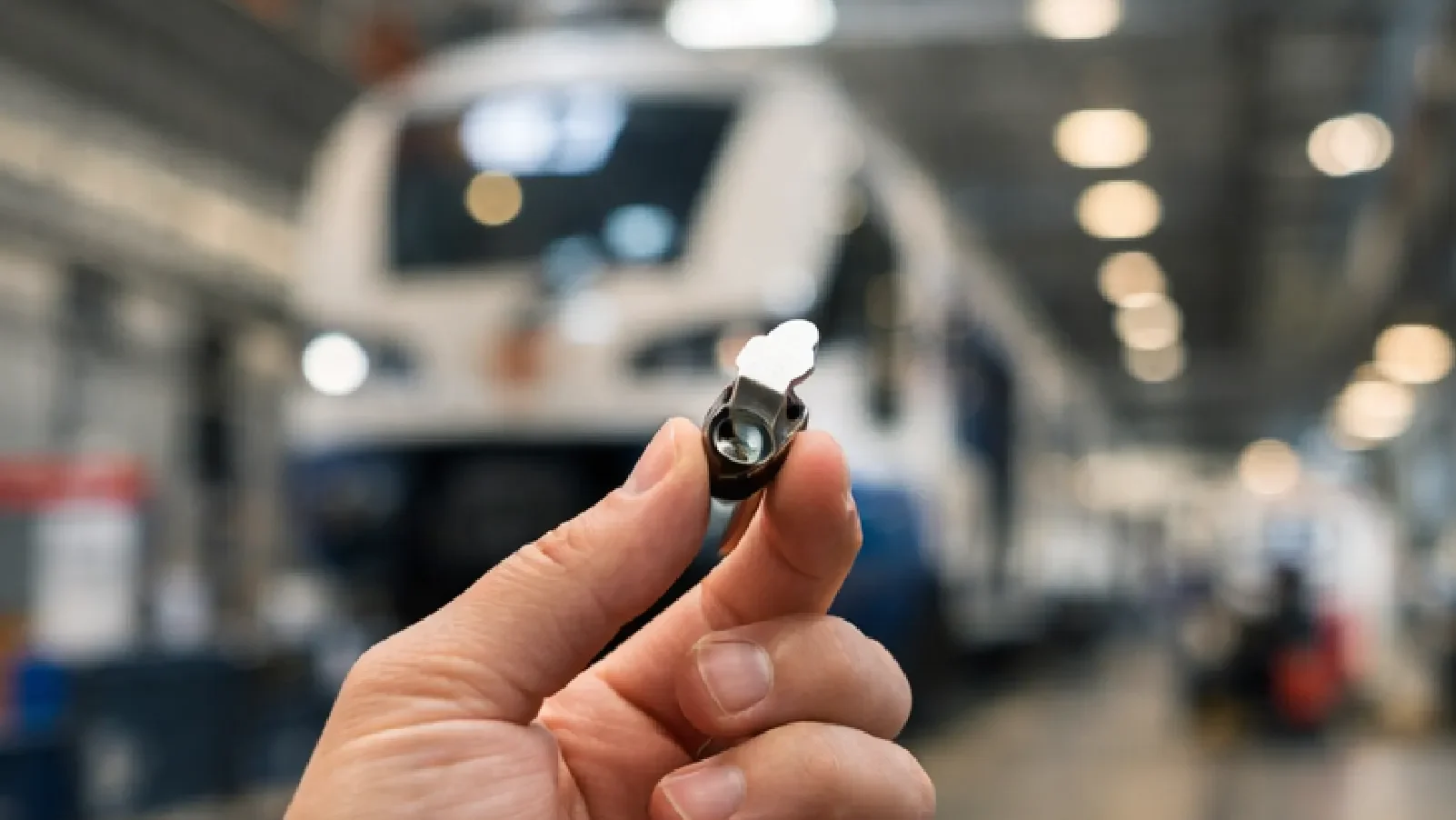
With assemblies, the standard answer is often frustrating: a single worn component, but the only option on the market is the complete unit. It’s expensive, it extends downtime – and it’s wasteful when everything else in the assembly is still in good condition. That was exactly the situation with an impeller in a cooling and ventilation unit at Alstom.
Rather than replacing the full assembly, Replique made it possible to replace just the individual part – covering manufacturing, balancing, precision post-processing to the required tolerances, and a protective surface treatment, all coordinated in one place.
Quick check: finding high-impact candidates
If you’re looking for 3D printing opportunities in your rail spare parts portfolio, these questions are a good starting point:
- Does this part regularly cause delays when it’s unavailable?
- Are lead times long or suppliers unreliable?
- Is demand low or irregular?
- Could sourcing a single component avoid a full assembly replacement?
- Do multiple sites need the same part, but with inconsistent supply today?
If several of these apply, a short feasibility check is almost always worth it.
The bottom line: 3D printing is the enabler – repeatable supply is the goal
3D printing is compelling for rail because it directly addresses the classic pain points: obsolescence, low volumes, long lead times and high part variety. But the real leverage comes when it’s treated as a supply strategy – with the right part selection, a stable manufacturing route, proper quality and documentation, and a setup that works across sites.
That’s what Replique is built for: one place for everything, the right technology for each part, and a process that turns one-off challenges into repeatable supply. A practical starting point: a short review of your top 10 “problem parts” – the ones that regularly cause downtime, sourcing headaches or stress – will usually surface the biggest opportunities very quickly.
Ready to take the first step?
Identify your top 10 problem parts and get a feasibility assessment.FAQ – 3D printing for rail spare parts
Are 3D-printed parts allowed in trains?
Yes – for many applications, they are. The key is selecting the right parts and establishing a controlled, repeatable manufacturing process.
Which rail spare parts are particularly well suited to 3D printing?
Strong candidates include obsolete parts, low-volume series, maintenance-critical small components, and repair parts where the alternative would be replacing an entire assembly.
Is 3D printing in rail only about plastics?
No. There are both polymer and metal applications. Additive manufacturing is also frequently combined with post-processing steps.
Do 3D-printed train parts need post-processing?
Often yes. Depending on the requirements, this can include machining, surface finishing, coating, balancing or assembly.
How do you decide between 3D printing and conventional manufacturing?
It depends on geometry, material, load requirements, surface finish, volume, lead time and documentation needs. The best solution is often the right process chain – not “just 3D printing.”
Can 3D printing reduce inventory?
For selected parts, yes. On-demand manufacturing can help avoid holding stock “just in case” – particularly for slow-moving parts.
Does 3D printing make financial sense?
It often does when you look at total cost: tooling, minimum order quantities, warehousing, obsolescence risk – and above all, the cost of downtime.