
Finding manufacturing suppliers is considered one of the most time-consuming tasks in industrial procurement. As soon as new production capacity, alternative technologies, or additional supply security need to be established, the process begins: research, comparison, audit, approval, and ramp-up. In many companies, this effort is underestimated because it is spread across several departments.
In particular, the search for suitable manufacturing partners rarely affects procurement alone. Engineering, quality assurance, production, and in some cases legal or compliance are usually directly involved as well. This increases not only lead times, but also internal costs. This article explains why that is, what it costs to find new suppliers, and how modern approaches can significantly simplify the process.
Why supplier sourcing takes so long
The search for new manufacturing partners rarely takes a long time because no suppliers exist. It takes time because suitable partners have to be identified, compared, qualified, and then reliably integrated into the serial production or repeat procurement process. The more critical the part, the greater the effort.
Needs analysis and requirement definition
1–3 weeksBefore the actual search begins, it must be clear what is needed: materials, tolerances, quantities, certifications, documentation requirements, delivery windows, and, if necessary, geographic restrictions. In practice, this starting point is often incomplete — and delays every further phase.
Research and long-listing of potential suppliers
2–4 weeksMarket research uses industry directories such as wer liefert was (wlw), trade fairs such as Formnext, recommendations from networks, and existing supplier relationships. This often results in an initial long list of 15 to 30 potential suppliers.
Request for Information and shortlisting
2–4 weeksAt this stage, capacity, certifications, references, and manufacturing capabilities are evaluated. A classic problem is that many responses remain superficial or incomplete. This follow-up work takes time and makes clean comparison more difficult.
RFQ, technical comparison, and negotiation
3–6 weeksQuotes are often difficult to compare directly because assumptions around materials, post-processing, packaging, lead time, or documentation scope are interpreted differently. As a result, the process becomes not only slower, but also more error-prone.
Supplier qualification and audit
4–12 weeksThis is usually the longest phase. It includes document review, audit, sample production, first article inspection, and formal approval by quality or procurement. In regulated industries, standards such as IATF 16949 or comparable release processes can significantly increase the effort required.
Production ramp-up and stabilization
4–8 weeksEven after approval, the search is not really over. Only once the first deliveries run reliably, packaging and quality are right, and communication works smoothly is the new supplier truly ready for use.
Realistically, finding suppliers in manufacturing often takes 2 to 3 months for non-critical parts, but in regulated industries it can quickly take 6 to 12 months or longer.
What the search for new suppliers really costs
The direct costs of supplier sourcing are often underestimated internally because they are spread across multiple departments and cost centers. Personnel effort, audits, sample parts, validation, and approval activities quickly add up to a meaningful budget item. That is why the overview below deliberately separates direct qualification costs from opportunity costs caused by delays or downtime.
| Cost category | Typical range |
|---|---|
| Personnel effort in procurement, quality, and engineering | 80–200 hrs. (approx. €6,000–20,000 in internal fully loaded costs) |
| Audit and travel costs | €800–2,500 per audit |
| Samples, first articles, validation, and approval parts | €500–15,000+ depending on complexity, industry, and testing effort |
| Additional documentation and coordination loops | partly included in personnel effort; additionally relevant in complex projects |
| Opportunity costs caused by delays or downtime | not included; potentially very high depending on the case |
| Direct cost per new qualification | approx. €7,000–40,000+ (excluding opportunity costs) |
In regulated, safety-critical, or highly documentation-intensive applications, validation and approval costs in particular can be significantly higher. With several new supplier qualifications per year, this can quickly add up to a high six-figure amount. That is exactly why the search for new manufacturing partners should not be viewed as a purely operational task, but as a strategic lever for procurement efficiency.
Looking for manufacturing partners — without months of qualification effort?
Replique provides access to qualified manufacturing processes and structured procurement channels for 3D printing, CNC, casting, injection molding, and more.How companies speed up the process
1. Use digital platforms for standard and specialized needs
For many manufacturing requirements, digital platforms offer a clear efficiency advantage. Instead of researching, auditing, and integrating new suppliers every time, companies can rely on already structured procurement and manufacturing channels. This is especially relevant for spare parts, small series, high variant diversity, and time-critical needs.
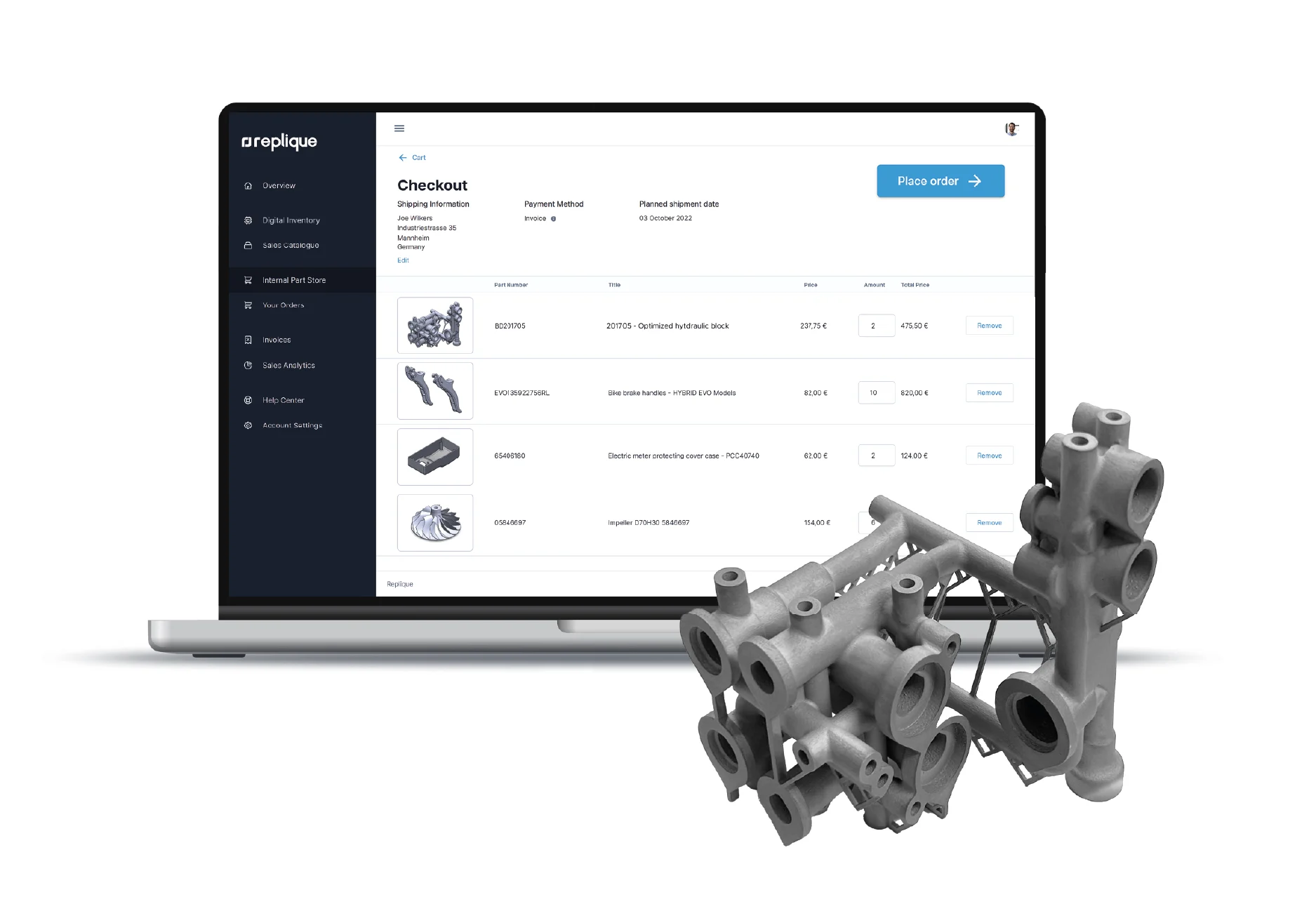
This is exactly where a platform like Replique can significantly reduce the effort: one point of contact, documented processes, suitable manufacturing technologies, and far fewer coordination loops.
to one point of contact.
For many companies, the issue is not only the purchase price, but above all the operational complexity: many contacts, many follow-ups, different processes. Platforms significantly reduce that effort.
Explore solutions2. Build a supplier pool and complete framework qualification upfront
Another approach is not to think part by part, but to approve suppliers for defined technology groups. This makes the next sourcing process much shorter because the fundamental assessment and process approval have already been completed.
3. Structure data and approval processes properly
Even without a platform, the process can be improved significantly: standardized RFIs, clean data packages, clear approval criteria, and centralized documentation reduce follow-up questions and speed up comparison.
Checklist for supplier qualification
- Current certifications such as ISO 9001 or industry-specific standards are in place and valid.
- Machine park, production capacity, and technological fit match the parts and call-off volumes.
- The quality assurance system is documented and robust in day-to-day operations.
- Reference projects or comparable applications are available and traceable.
- Sub-suppliers, materials, and critical process steps are transparent.
- IP protection, NDA, and data security are properly regulated.
- There is a clear approach for handling failures, capacity bottlenecks, and escalations.
- Repeat orders, documentation, and future scaling are covered by the process.
Conclusion
Finding manufacturing suppliers is far more than a quick market request. It is a multi-stage, cost-intensive process with a high need for coordination. Companies that set it up properly gain supply security and better comparability. Companies that improvise it every time pay in time, internal cost, and additional risk.
Especially for low- to mid-volume needs, high product variety, spare-part scenarios, or short-term demand, structured platform approaches can offer a clear advantage. Instead of building up many individual suppliers, companies can rely on already organized processes — for example for 3D printing, small series, or spare parts.
Simplify supplier sourcing?
Replique connects companies with qualified manufacturing processes — with less sourcing effort, clearer control, and one central point of contact.FAQ: Common questions about supplier sourcing
How long does it typically take to find a new manufacturing supplier?
For simple requirements, often several weeks; for qualification-intensive or regulated applications, however, it can quickly take several months. The exact duration depends heavily on drawing maturity, quality requirements, technology, and the approval process.
Why is supplier sourcing so expensive?
Because it involves not only research, but also comparison, audits, samples, quality checks, coordination, and ramp-up. Many of these costs are spread internally and are therefore underestimated.
When is a digital platform worth using instead of a traditional supplier search?
Especially for small series, spare parts, high variant diversity, urgent needs, or when building up your own supplier base would be disproportionately time-consuming. In those cases, a platform model can significantly reduce operational complexity.
Which sources are useful for finding suppliers in manufacturing?
Typical sources include industry directories, trade fairs, recommendations, existing supplier relationships, and specialized platforms. What matters most, however, is not just the source, but the quality of the qualification process that follows.
Can I also source small-volume demand more professionally?
Yes. Especially for small but critical requirements, a structured process or platform approach is worthwhile because the relative procurement effort would otherwise be disproportionately high.